


Is It Soundproof? No — Here’s What Our Walls Actually Do (and Who Shouldn’t Buy Them)

Last reviewed by Amit · July 2026
Are room dividers soundproof? No. Not ours, and not anyone’s. A freestanding wall is not a soundproof wall — and I would rather tell you that now than sell you something you’ll regret.
Here is the honest version, from someone who has built these for 25 years.
The Honest Answer
A freestanding room divider is not soundproof.
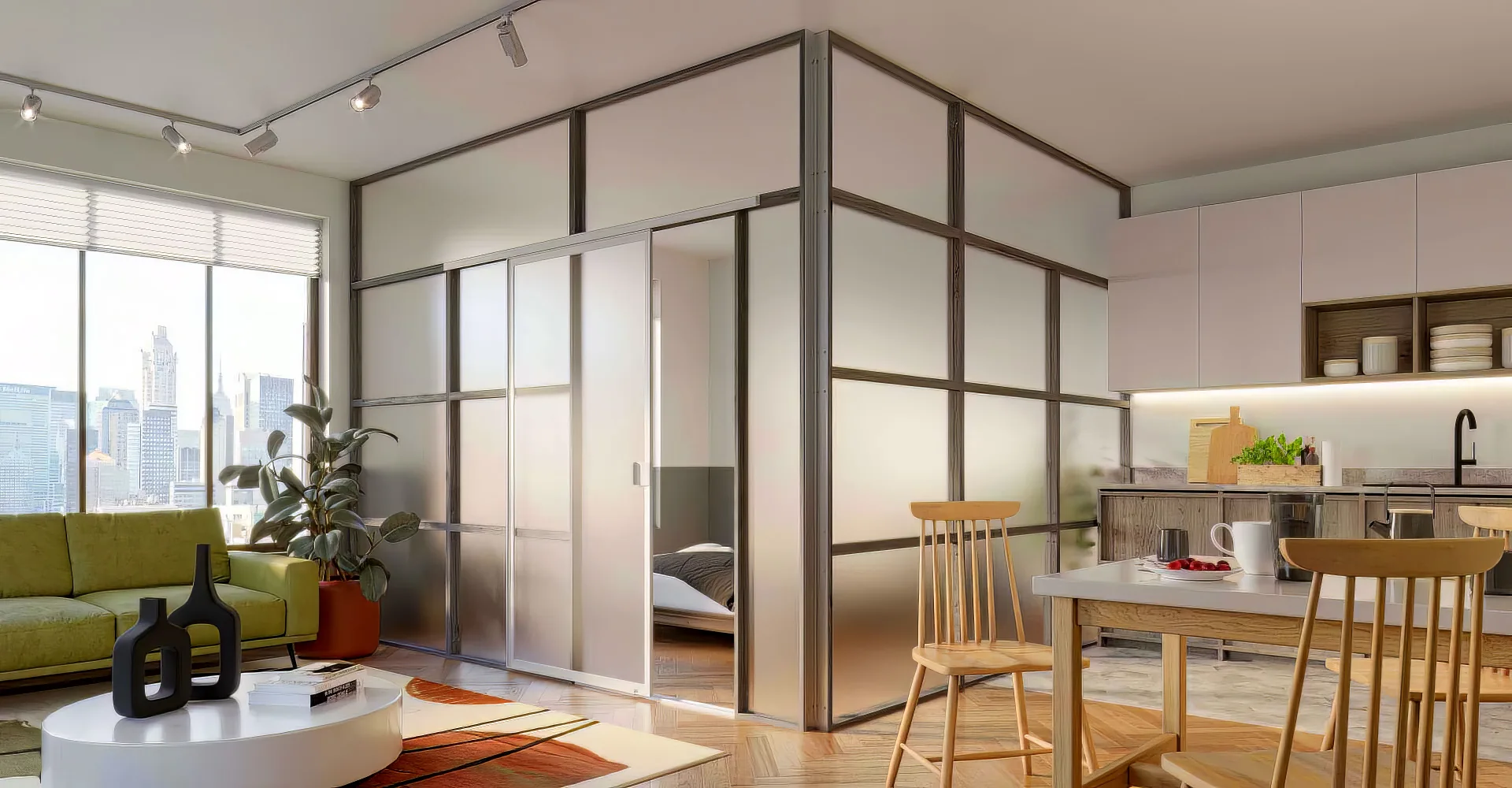
What it is: a real visual barrier that makes a space meaningfully quieter and finally feels like its own room.
Those are two different promises. Most of the confusion — and most of the disappointed buyers — come from mixing them up.
Soundproof vs. Quieter
“Soundproof” means almost no sound gets through. You could run a meeting on one side and hear nothing on the other.
“Quieter” means you cut the direct path of sound and take the edge off. Conversation stops carrying. The TV stops bleeding into the bedroom. The room feels calmer and more private.
A freestanding wall delivers the second one. Reliably. It does not deliver the first — and no honest maker can promise you it will.
If you’re shopping panels labelled “acoustic” and trying to work out which of those two things you’re actually being sold, we broke that down separately in the Absorption Trap — including the one variable that matters more than any material choice.
Why a Freestanding Wall Can’t Be Soundproof
It comes down to one thing: seals.
Real soundproofing needs a wall sealed tight to the floor, the ceiling, and the walls on both sides, usually with heavy mass and an air gap. In the trade, sound blocking is measured on a scale called STC. Permanent, sealed construction can reach high STC numbers. A wall that stands on its own and touches nothing cannot — sound simply travels over, under, and around it.
Our walls are freestanding on purpose. That is what makes them permit-free, damage-free, and movable. The same feature that keeps your deposit safe is the reason they will never be a sealed, soundproof box.
Anyone selling you a “soundproof” freestanding wall is selling you a seal they don’t have.
What Our Walls Actually Do for Sound
Two things, and they matter more than people expect.
First, full visual privacy. You cannot see in or out — and a surprising amount of what we call “noise” is really the feeling of being exposed. Close the sightline and a room instantly feels more private.
Second, real sound dampening. Our optional acoustic panel upgrade adds density and softens sound noticeably. The space becomes significantly quieter — without ever crossing into “soundproof.”
For a bedroom, a salon suite, a focus room, or a treatment room, that is usually exactly the right amount.
Who Should Not Buy One
I turn people away, and I would rather do it before you buy than after.
Do not buy a freestanding wall if you need certified acoustic privacy:
- Therapy or counseling offices
- Medical exam or consult rooms
- Legal or financial offices handling confidential conversations
- Recording studios, or anything that needs true sound isolation
If a conversation legally or ethically cannot be overheard, you need sealed construction, not furniture. Tell me that up front and I will tell you the same.
Who It Works Great For
This is most people, most of the time:
- Bedrooms and flex bedrooms in apartments
- Salon, lash, and treatment suites
- Gyms and fitness studios
- Retail floors and private dining
- Med spas and wellness rooms
- Home offices and focus zones
In every one of these, “significantly quieter, with total visual privacy” is the goal — and that is exactly what a freestanding wall is built to do.
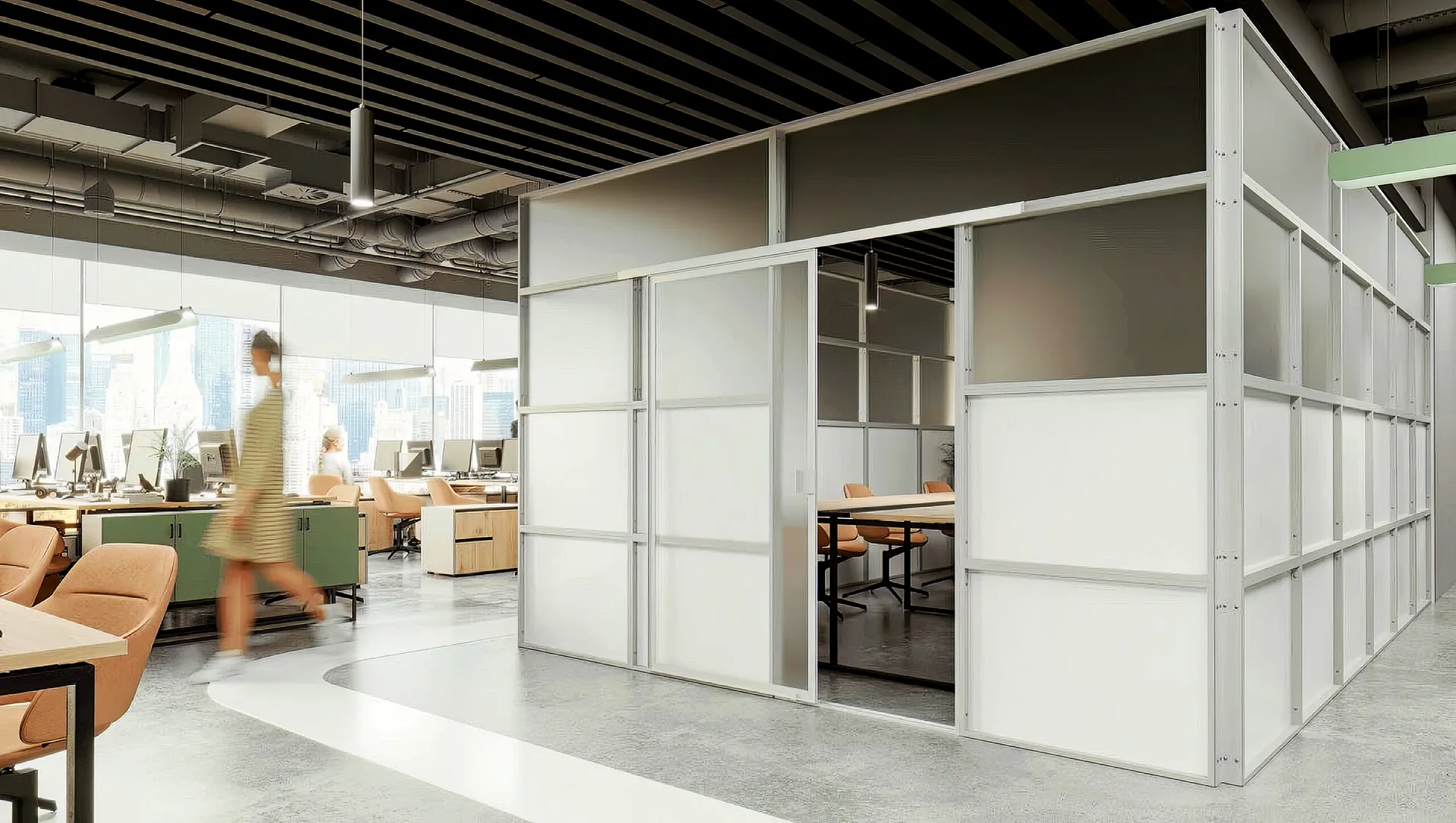
If you want the privacy of a closed room, a room divider with a door takes it a step further: a real sliding door closes the space off completely. For offices reconfiguring floors, our demountable partitions do the same job at commercial scale.
The Bottom Line
Soundproof? No.
Significantly quieter, totally private, permit-free, and movable? Yes — every time.
Buy it for what it does, not for a claim it can’t keep. If quieter and private is what you actually need, you’ll be thrilled. If you need a sealed, silent room, I’ll be the first to tell you to look elsewhere.
See the full lineup on our room dividers overview, get a quote, or call 212.671.0722. Have more questions? See our FAQ.
Frequently Asked Questions
Are room dividers soundproof?
No. A freestanding room divider is not soundproof. It gives you full visual privacy and, with our optional acoustic panel upgrade, a significantly quieter space — but it does not fully block sound the way sealed construction does.
Do room dividers reduce noise at all?
Yes. They cut the direct line of sound and, with the acoustic panel upgrade, add real dampening. Everyday conversation and noise carry much less.
Why can’t a freestanding wall be soundproof?
True soundproofing needs a wall sealed to the floor, ceiling, and side walls. A freestanding wall touches nothing by design, so sound travels around it. That is also why it needs no permits and causes no damage.
What if I need a fully private, silent room?
Then you need sealed, permanent construction — not freestanding furniture. Uses like therapy, medical, legal, financial, or recording spaces require certified acoustic isolation we don’t claim to provide.
Does the acoustic panel upgrade make it soundproof?
No. It makes the space significantly quieter, not soundproof. It is an upgrade to dampening and privacy, not a sound-isolation guarantee.
— Amit · Founder, 1W2R · 25+ years building walls in NYC
Get the spec PDF + 24h quote
No contractor, no permit, ships nationwide.