

Salon Booth Rental Prices in NYC: The Chair-to-Room Spread


Reach me: 212.671.0722 · sales@1w2r.com
Last reviewed by Amit · August 2026
$377.38 a week.
That’s what a salon booth rents for in New York on average, per listing data from booth-rental platform SalonRenter. A chair, a mirror, a strip of open floor — call it roughly $1,500 a month.
Now look one line down in the same listings. A private suite — same city, same trade, four walls and a door — lists at $1,500 to $2,500 a month. Manhattan booths alone climb to $1,000 a week.
Same square footage. Same plumbing. Same building. The only difference between the bottom of that range and the top is an enclosure.
I call that gap the Chair-to-Room Spread — the monthly money sitting between what an open-floor chair earns and what an enclosed private room earns. If you own or lease a salon with open floor, the spread is yours to collect. Most owners never do, because they think collecting it means construction.
It doesn’t. Let’s do the math.
Who’s already collecting the spread
The salon-suite franchises are — at scale.
Sola Salons is at 750 locations with more than 21,000 independent beauty professionals renting its rooms, with up to 275 more locations planned, per the International Franchise Association. Entrepreneur’s Franchise 500 ranked it #1 in the salon-suites category for 2025. In NYC, suite operators like Optima and The Parlor are pre-leasing new floors right now.
Read that as a market signal, not a threat. A national franchise system built its entire business on one fact: beauty professionals pay a premium for a private room. Not better chairs. Not better product lines. A door.
And the tenant pool for that product keeps growing. SchedulingKit’s industry statistics put 48% of salon professionals in independent or booth-rental arrangements, and 66% of solo pros report higher net income working for themselves. Half your potential renters are now independents — and the independent’s first upgrade is always the same: out of the open floor, into a room.
The suite giants answered that demand by signing new leases. You can answer it inside the lease you already pay for — which is exactly what our salon, lash and tanning builds are for.
The spread, in dollars
Say you run a salon with three chairs’ worth of open floor you rent out — or could.
- As chairs: three booths at the New York average is roughly $4,530 a month, per SalonRenter’s ~$377/week figure.
- As rooms: three private rooms at even the bottom of the suite range — $1,500 a month, per the same listing data — is $4,500 a month. At the middle of the range you’re near $6,000.
The honest version of that math: converting chairs to rooms costs you some floor area, so three chairs might become two rooms. Two rooms at $1,800–$2,500 still beats three chairs at $377 a week — and the room tenant stays longer, books her own clients, and treats the space as hers.
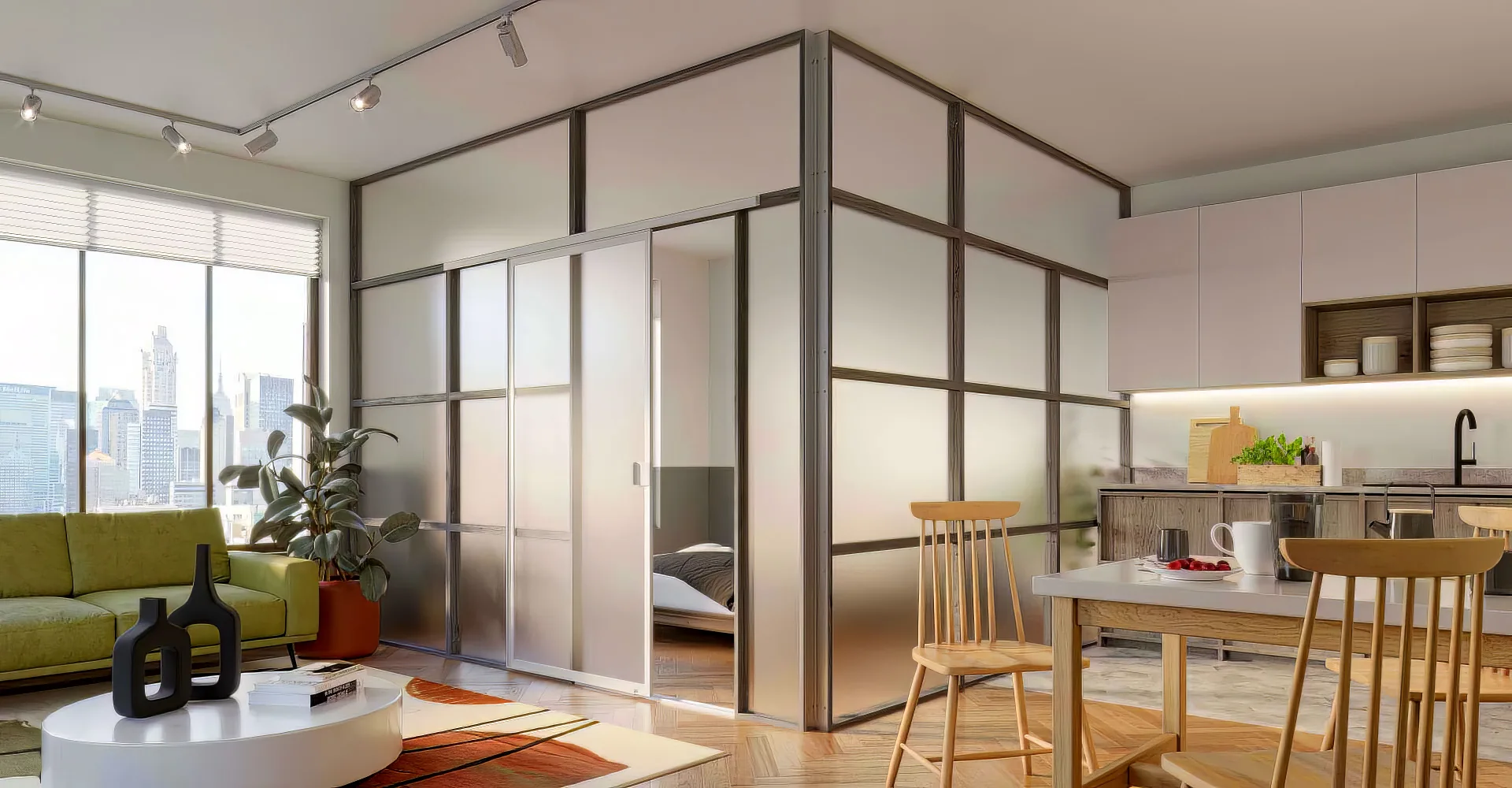
Now the cost side. A freestanding 1W2R wall starts at $1,176 to own. One wall can turn a corner of open floor into an enclosed station; two can frame a full private room with a door. Against a spread of several hundred dollars per room per month, the wall pays for itself inside the first few months of the first tenant — and you own it after.
Three ways to sell a private room
| Rent at a suite franchise | Construction build-out | 1W2R freestanding walls | |
|---|---|---|---|
| Who collects the rent | The franchise | You — eventually | You — immediately |
| Upfront cost | $1,500–$2,500/mo, forever | Contractor bid + permits | From $1,176, once |
| Timeline | Their waitlist | Weeks of dust and closed chairs | An afternoon |
| Landlord / DOB | Their lease | Permits, landlord sign-off | No attachment to floor, wall, or ceiling — no permits |
| When your lease ends | You walk away with nothing | The build-out stays — a gift to the landlord | Strikes clean, moves to the next address |
| Reconfigure later | No | Demolition | Move the wall |
Sources: suite pricing per SalonRenter NYC listings; franchise scale per the International Franchise Association (Sola Salons, 2025); build-out and permit contrast per NYC DOB rules for fixed construction vs. freestanding furniture-class walls. Verified August 2026.
Why “freestanding” is the whole trick
A built wall in a commercial space is construction — permits, landlord approval, and a permanent improvement that legally belongs to your landlord the day your lease ends. With 8,400 NYC businesses closing in Q2 2025 and storefront vacancy above 11% — the numbers being cited around the lease-renewal guarantee bill S8319 now moving through Albany — building permanent rooms into a lease you might not renew is money gifted to the landlord.
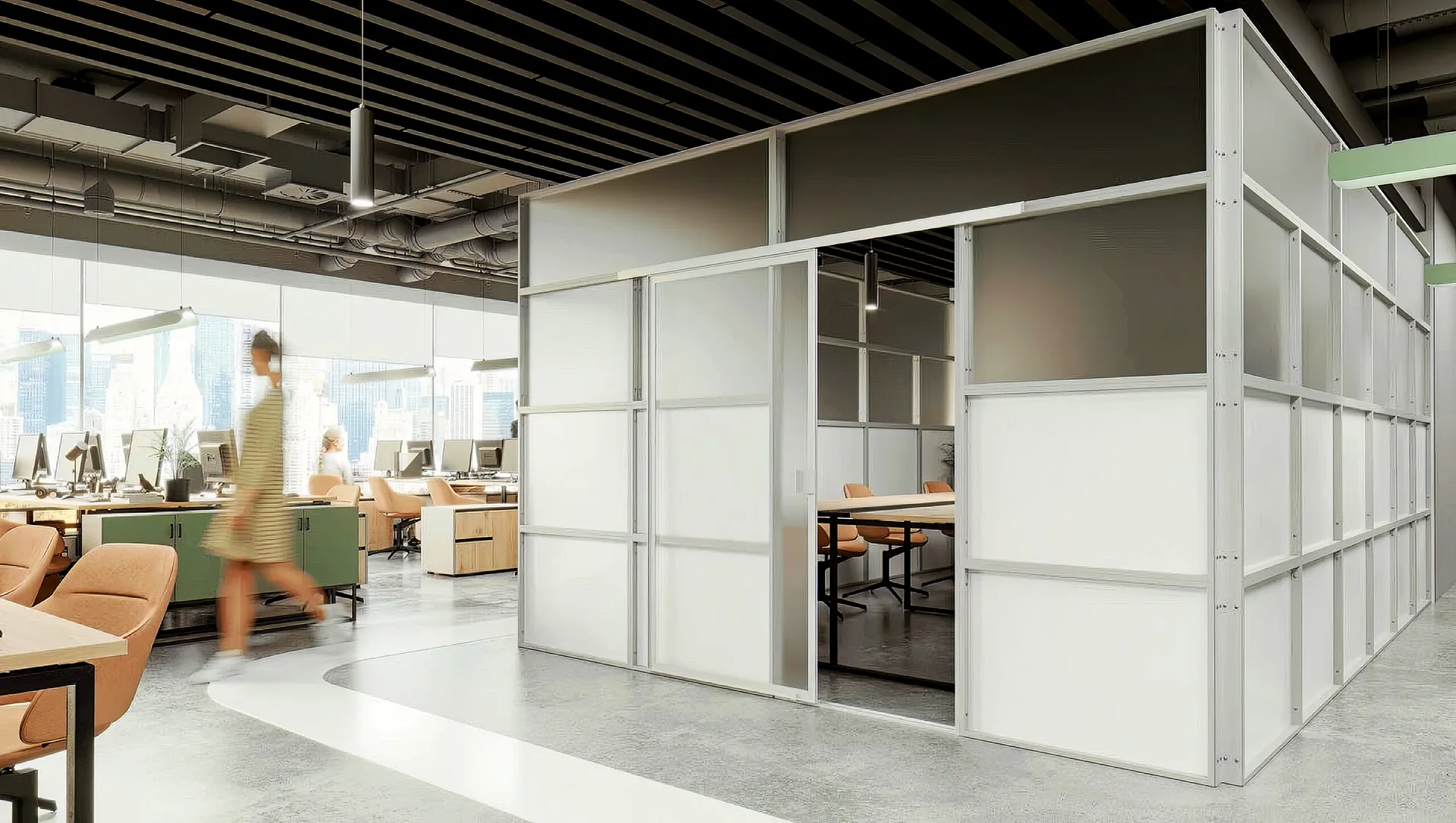
A 1W2R wall touches nothing. It stands on its own weight, full height, no anchors in the floor or ceiling. That’s what keeps it out of permit territory, keeps your landlord relationship simple, and — the part the spread math loves — makes the room portable. New address, same rooms. Disassembly, not demolition.
It’s the same logic we build on for salon and studio floors, for spa and massage treatment rooms, and for tattoo studios — different trades, same spread.
The honest turn — what a wall won’t do
I’ve built walls in NYC for 25+ years. Here’s what this one does not do:
- It won’t soundproof a room. No divider will — anyone who promises soundproofing is lying to you. What you get is sound dampening and full visual privacy: conversation softens, sightlines close completely. For a color consult or a facial, that’s the product. For a recording booth, it isn’t. The physics of why is here.
- It won’t change your license obligations. If a service you offer requires a code-built enclosure under state rules, a divider doesn’t substitute for it. Check your rules before you sell the room.
- It won’t fix a bad lease. Read yours. Freestanding means most landlords have nothing to object to — furniture-class, no alteration — but “most” isn’t “yours.”
Everything else — the privacy, the premium, the spread — it does, the same afternoon it arrives.
Salon suite ideas that actually rent
If you’re converting floor, build what suite tenants already pay for:
- The door room. A fully enclosed room with a real door rents at the top of the range. The door is the product.
- The daylight room. Panels that let light through while closing sightlines — the room feels bright, not boxed. Renters photograph their space; light rents rooms.
- The double station. One wall splitting two back-to-back chairs into semi-private stations — the cheapest first step into the spread.
- The flex room. Because the walls move, an event weekend or a new tenant mix is a reconfiguration, not a renovation. See how the system works.
Price the spread on your own floor
Measure the open floor you rent out today and count the chairs on it. That is the input. The output is how many enclosed rooms it becomes and what each one lists for.
Send us the plan or a photo. Our salon, lash and tanning studio page carries the configurations and what a room costs to own, and if your floor doubles as commercial space the same system covers reconfigurable partitions for the rest of it. You will have a number the same day.
Frequently asked
Platform listing data (SalonRenter) puts the New York average around $377 a week, with Manhattan booths reaching $1,000 a week. Private suites list at $1,500–$2,500 a month. That gap is the Chair-to-Room Spread.
You can charge for what the tenant gets: full visual privacy, a defined room, a door if you configure one. Where your room lands in the $1,500–$2,500 listing range depends on your location and finish — the enclosure is what moves a listing from the booth column to the suite column.
No, and we will not tell you otherwise. They dampen sound and block sightlines completely.
Our walls are 100% freestanding — no attachment to floor, wall, or ceiling — so they are outside DOB permit territory, the way furniture is. Landlord approval usually is not triggered because nothing is altered, but read your lease; some commercial leases have their own rules.
From $1,176 to purchase. Ships flat-pack nationwide; our own crew installs across the tri-state. A room goes up in an afternoon, not a construction schedule.
The walls strike clean and move with you. Disassembly, not demolition — the rooms are an asset you keep, not an improvement you donate to the landlord.
Get the spec PDF + 24h quote
No contractor, no permit, ships nationwide.