


When Your Building Plays Favorites: How to Get a Wall Into a Gatekept Building


Reach me: 212.671.0722 · sales@1w2r.com
Last reviewed by Amit · July 2026
You found the wall you want. You called the management office to schedule, and heard the sentence thousands of NYC renters hear every year: “We only allow approved vendors in the building.” You ask who’s on the list. Somehow — funny thing — it’s always the same two or three wall companies, and the company you actually want to hire isn’t one of them.
Welcome to the gatekept building. After 25 years of installing in every kind of NYC property — from white-glove Park Avenue co-ops to walk-ups where the super is the management office — I can tell you two things: why that list exists, and why it almost certainly doesn’t apply to what you’re trying to do. This is the playbook.
Why the list exists (the official reasons, and the real ones)
The official logic is legitimate. Buildings require contractors to carry insurance — a certificate of insurance, or COI — because a crew that floods a lobby or cracks an elevator needs to be covered. Over time, the management office accumulates COIs from a few companies, and “send us your COI” hardens into “these are our approved vendors.” It’s administrative laziness more than conspiracy: the list is whoever already has paperwork on file.
The less official reality is that the list also runs on relationships. Companies that work a building repeatedly get to know the staff. Referrals flow. I’m not here to make accusations — I’m here to tell you it doesn’t matter, because you don’t need to beat the list. You need to route around it, and the route is one word: furniture.
The three gates — and which ones actually apply to you
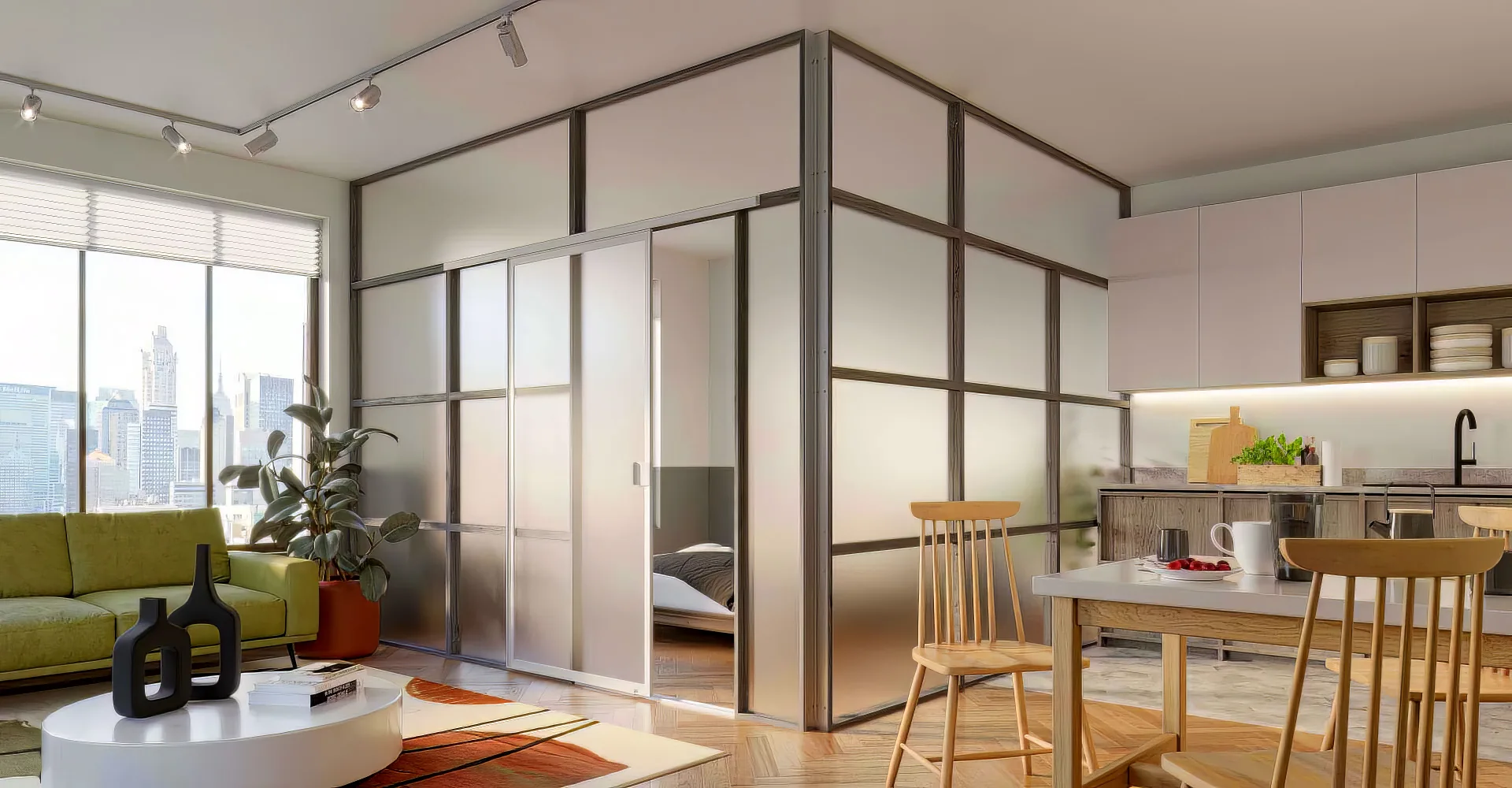
Gate one: the alteration clause. Your lease says no alterations without written consent. That’s about construction — anything attached to, drilled into, or built into the apartment. A pressurized wall company is proposing an alteration; of course they need approval. A freestanding divider attaches to nothing — it’s delivered furniture, the same legal category as the couch the movers brought last week without anyone’s permission. More on the distinction: what “classified as furniture” actually means.
Gate two: the approved-vendor list. Read it carefully — it governs contractors performing work in the building. A furniture delivery is not contractor work. Nobody’s building ever approved your mattress delivery, your IKEA couch, or the treadmill your upstairs neighbor drags around at 6 a.m. If no construction is happening, there’s no vendor to approve.
Gate three: the super’s clipboard. Elevator reservations, delivery windows, “who’s coming up?” This is the gate that actually stops people — not rules, but friction. Handle it like any furniture delivery: give notice, book the service elevator if the building has one, and be a good neighbor about it. You’re not sneaking anything in. You’re receiving furniture.
The playbook, step by step
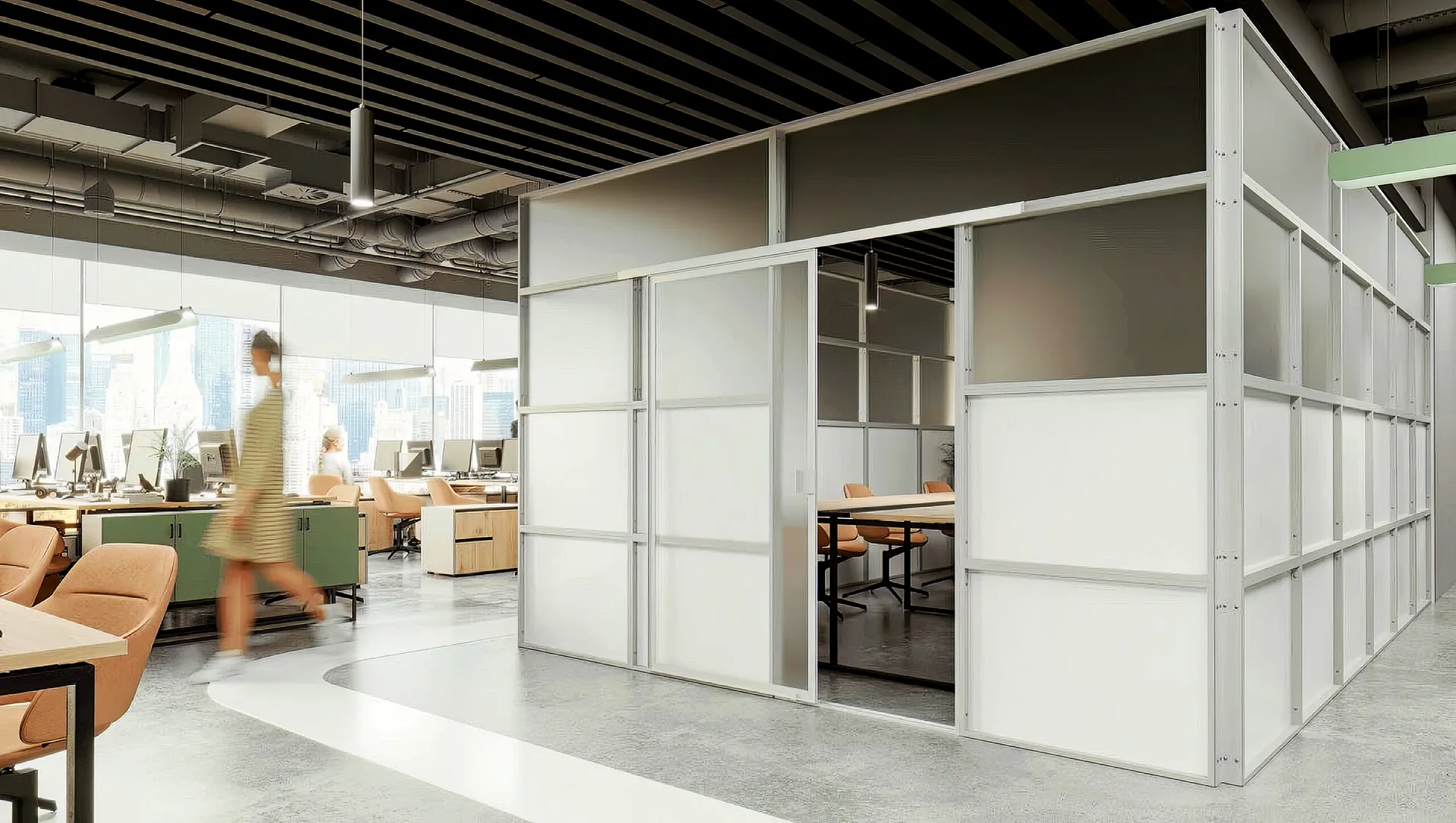
- Order a system that requires no crew. Our freestanding partition walls arrive finished from our Brooklyn shop and assemble with a drill and two clamps. No construction means no contractor, and no contractor means the vendor list is irrelevant.
- Schedule it as a furniture delivery. Call or email the management office: you’re receiving a furniture delivery on Tuesday between 10 and 2, and you’d like to reserve the service elevator if required. That’s the whole conversation. You are not asking permission — you’re giving notice, same as any delivery.
- Bring it up and build it. You, a friend, or a tasker. Panels connect with the drill and clamps; leveling legs dial it plumb. Most people finish in under an hour.
- If anyone asks afterward: it’s a freestanding furniture unit — attached to nothing, damaging nothing, removable in minutes. Offer the spec sheet. In 25 years, a documented furniture classification ends the conversation far more often than it starts one.
The script, if management pushes back
What you’re doing there is giving the manager a way to say yes: you’re not asking them to bend the vendor policy, you’re clarifying that the policy was never about furniture. Most pushback evaporates when the person across the desk realizes there’s nothing to approve — and nothing they’ll be blamed for later.
When you should still talk to the building first
Honesty check: furniture classification covers the wall, not common sense. If your lease has unusual clauses, if you’re in a co-op with a notoriously litigious board, or if the divider will be visible from a common hallway, a two-line email to management (“receiving a freestanding furniture unit, no installation work”) creates a paper trail that costs you nothing. The goal was never to hide anything — it’s to avoid asking permission you were never required to ask. Renters with hostile boards should also read how co-op house rules on temporary walls actually get enforced.
Weighing the real dollars behind each wall type before you decide? Our Move-Out Test breaks down the full three-year cost of pressurized, bookcase, and freestanding walls — install, living with it, removal, and move-out day.
No crew. No vendor list. No gatekeeper.
Freestanding, furniture-classified, delivered finished — assemble with a drill and two clamps, or let our crew handle it where access is easy. We build in Brooklyn, ship nationwide, and service all five boroughs and New Jersey.
Frequently asked questions
Buildings control contractors, common areas, and construction — not what furniture you own. A freestanding, non-attached divider is personal property. What buildings can regulate is how deliveries use common areas (elevator reservations, delivery hours), so cooperate on logistics and stand firm on category.
House rules about vendors govern work performed in the building — alterations, renovations, repairs. Receiving furniture isn’t work. If management insists otherwise, ask them (politely, in writing) to point to the clause that governs furniture delivery. There usually isn’t one — and asking the question in writing often ends it.
Of course — most of our NYC jobs are crew-installed, same day. The self-install route exists for buildings where crew access is the obstacle. If your building simply requires a COI from any outside company, talk to us — we’ll work out the paperwork.
Removal demands attach to alterations and damage. A freestanding unit creates neither: nothing was built, nothing is attached, nothing needs repair when it leaves. That’s the entire design — and it’s why the furniture classification, not cleverness, is what protects you.
Get the spec PDF + 24h quote
No contractor, no permit, ships nationwide.