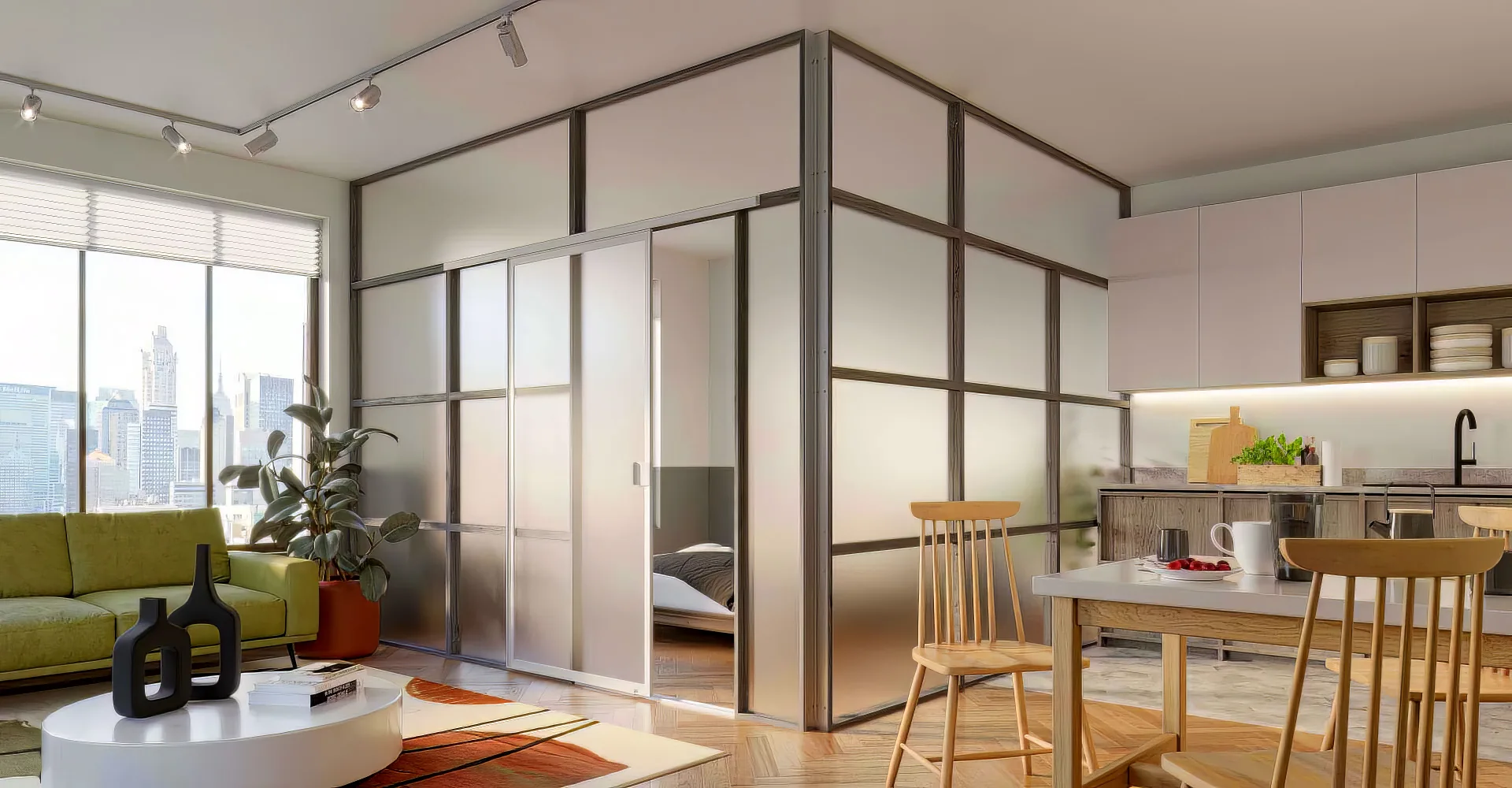




Three Generations, One Apartment: The Multigenerational Living Guide for NYC

Last reviewed by Amit · August 2026
More NYC families than ever are living three generations to an apartment — and the hardest part is not space, it is privacy. An apartment room divider in NYC gives grandparents, parents, and kids their own rooms without moving or renovating.
Over 25 years I have built a lot of these, and the calls keep getting more common.
Multigenerational Living Is the New Normal
In 2024, 17% of homes purchased were bought for multigenerational living — an all-time high.
The long trend is even sharper. As of 2021, about 25% of US adults aged 25 to 34 lived in a multigenerational household, up from just 9% in 1971.
Aging parents, adult children, high rents, and the cost of care are pulling families back under one roof. In NYC, where space is the scarcest thing, that means one apartment doing the work of two.
The Privacy Problem
When three generations share a home, everyone gives something up. The grandparent has no quiet room. The couple has no door. The kid does homework where the TV lives.
Square footage is not usually the issue. The issue is that an open apartment has no boundaries — and shared living without boundaries is where the friction starts.
What families need is simple: more rooms, without renovating a home they may not own.
How to Divide the Apartment
A freestanding wall lets you create real, private rooms wherever the family needs them:
- Create a private room for an elderly parent, with quiet and a door that closes
- Divide a living room into a bedroom for a couple or an adult child
- Give kids their own defined space to sleep and study
- Carve a caregiver or guest area out of an open layout
Add a room divider with a door and the space becomes a true room — closable, private, and dignified. If the family’s needs shift, a portable dividing wall comes apart and moves to the next room. Our guide on adding a bedroom to a one-bedroom legally walks through a common version of this.
For the fullest version of this — a parent or an adult kid getting a real suite of their own — see our guide to building a removable in-law suite.
Co-op and Condo Friendly
Co-op and condo boards worry about permanent changes. A freestanding wall makes that easy.
Because it attaches to nothing, it is classified as furniture — no permit, no structural change, no damage. It leaves when you leave, clean. That is exactly why boards and landlords are comfortable with it. We explain the details in why temporary walls are landlord-approved.
What It Costs
1W2R room dividers start at $1,176, depending on size, configuration, and finish. Financing is available. Most local jobs go up the same day.
The Bottom Line
Bringing family under one roof is a gift — but only if everyone still has a door to close.
You do not need a bigger apartment or a renovation to make three generations work. A few freestanding walls turn one shared space into private rooms for everyone in it.
Get a Quote or call 212.671.0722. Have more questions? See our FAQ.
Frequently Asked Questions
Can I create a private room for an elderly parent without renovating?
Yes. A freestanding room divider — ideally with a door — creates a quiet, private room without construction, permits, or damage.
Are room dividers allowed in co-ops and condos?
Almost always. Because they are freestanding and attach to nothing, they are classified as furniture rather than a structural change, which is what boards care about. Check your building’s rules to confirm.
Can I divide a living room into a bedroom?
Yes. A freestanding wall carves a private, enclosed bedroom out of a living room or open layout, and it can include a real sliding door.
What if the family’s needs change?
The wall is modular and portable. It comes apart, reconfigures, and moves to a new room or a new home — nothing is wasted.
Sources: National Association of Realtors, Profile of Home Buyers and Sellers, reported in “One Big Happy Household: How Families and the Data Are Shaping Multigenerational Living,” Amethyst Marroquin, May 27, 2025. Pew Research Center, “Young adults in U.S. are much more likely than 50 years ago to be living in a multigenerational household,” Richard Fry, July 20, 2022, based on Census Bureau Current Population Survey ASEC data.
— Amit · Founder, 1W2R · 25+ years building walls in NYC
Get the spec PDF + 24h quote
No contractor, no permit, ships nationwide.