


The Door Premium: What One More Bedroom Really Costs in NYC Right Now


Reach me: 212.671.0722 · sales@1w2r.com
Last reviewed by Amit · July 2026
Manhattan's median rent hit $5,295 in June — a new all-time record, 8% higher than a year ago. Brooklyn set its own record the same month: $4,350. Listings shrank 16% year over year while renters competed for what was left.
Every outlet ran the same headline. Rents are high. You knew that.
Here's the number nobody put in a headline: in Brooklyn, the average one-bedroom rents for $4,297 and the average two-bedroom rents for $5,740. Same market, same month, same borough.
The difference is $1,443 a month. $17,316 a year. For one more door.
The Door Premium — what you're actually bidding on
We call that gap the Door Premium: the price of moving from "we share every room" to "someone can close a door." It's the most expensive door in America, and you pay it twelve times a year, forever, with rent increases compounding on top.
Strip the listing language away and a second bedroom buys you three things:
- A sightline that ends. The bed isn't in the living room.
- A door that closes. Someone sleeps while someone else watches the game.
- A separate address for your stuff. A room that belongs to one person.
None of those three requires the building to move a single pipe or wire. Which is exactly why the flex apartment exists — New Yorkers have been engineering their way around the Door Premium for decades.
The math — premium vs. one-time
Run it the way you'd run any lease decision.
Path one: pay the premium. Upgrade to the two-bedroom. In Brooklyn, at June averages, that's $1,443 more per month before the annual increase. Three-year cost: north of $50,000, and at the end you own nothing.
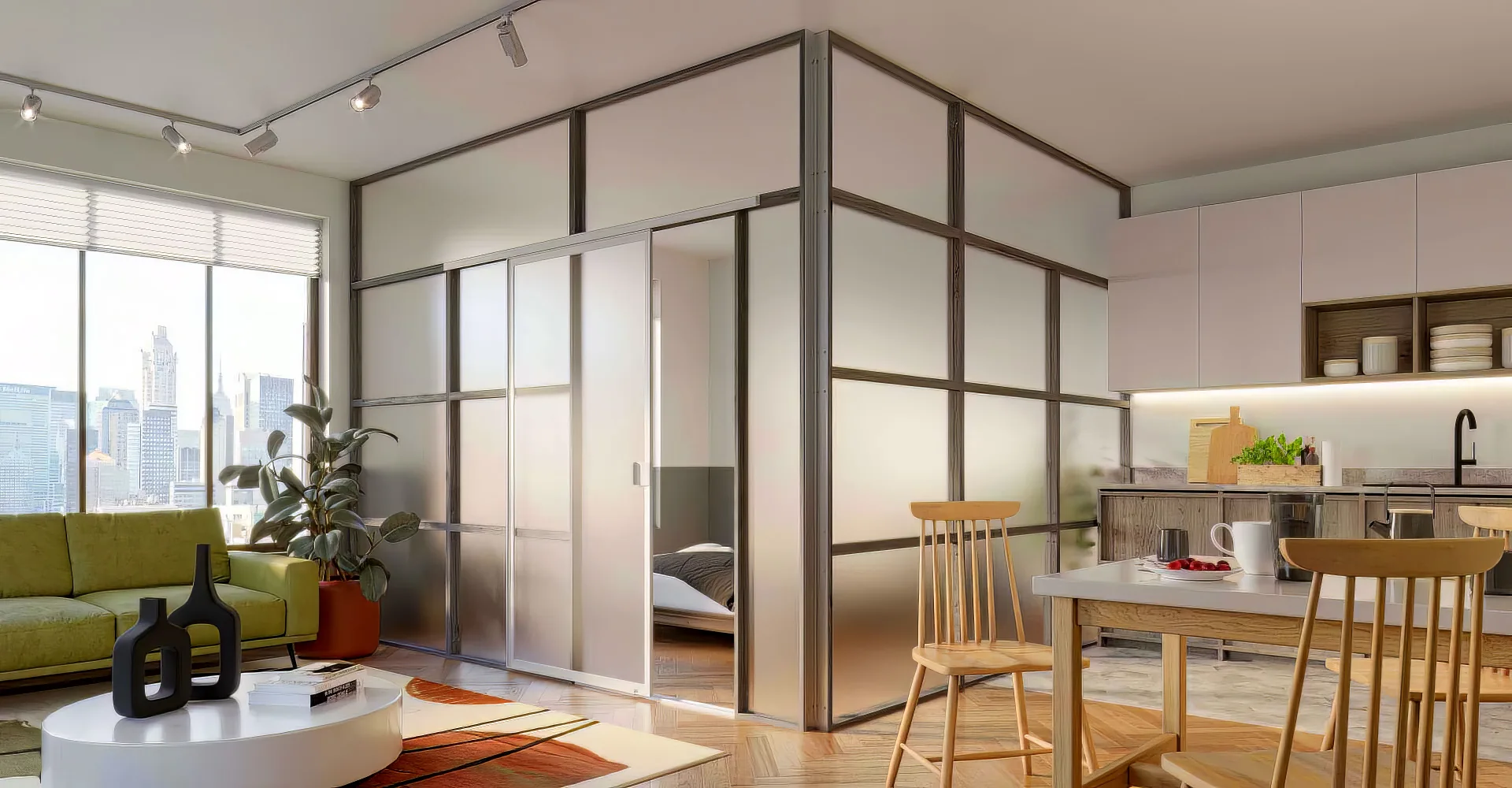
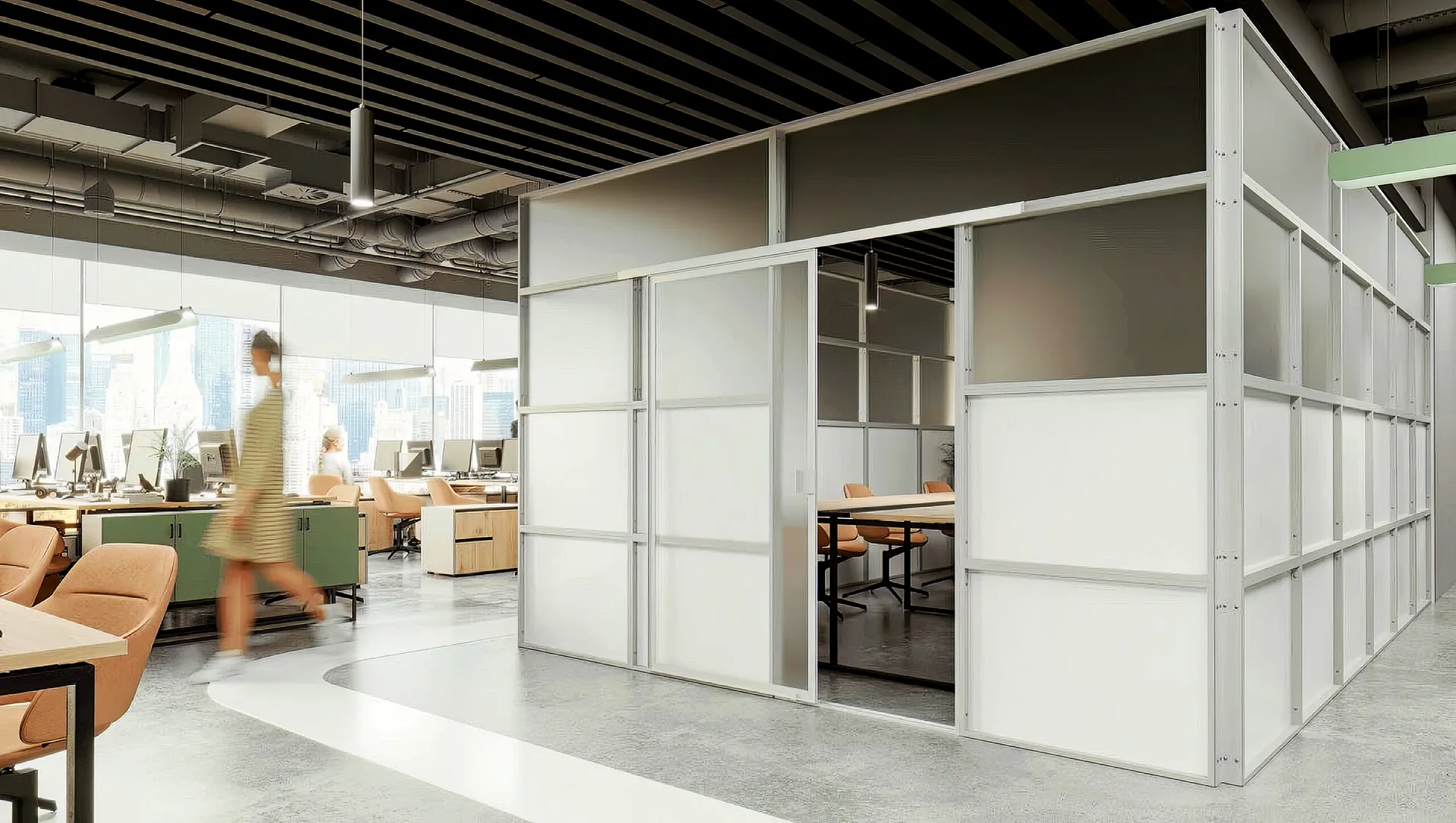
Path two: keep the one-bedroom and divide it. A freestanding wall with a sliding door turns the living room's dead corner or the oversized bedroom into a private space with a real door. Our standalone dividers start at $1,176 — that's our own list price, not an estimate — and a typical 11–13 ft span with a sliding door lands in the low thousands, once. It's yours. It moves with you. It resells.
Even if you spec generously, the wall pays for itself against the Door Premium in the first two to three months. Every month after that is money that stays in your account.
Chart 1 — One more room, three ways to get it
| Upgrade to a 2BR | Pressurized / rented wall | 1W2R freestanding divider | |
|---|---|---|---|
| Monthly cost | +$1,443/mo (Brooklyn average gap) | Rental fee + install + removal | $0 — one-time purchase |
| Building approval | Not needed | Usually required — many buildings ban them | Not required — classified as furniture |
| Move-out day | Another broker cycle | Removal fees, scheduling, patching | Slides out fully built — it's yours |
| After three years | ~$52,000 spent, own nothing | Fees spent, own nothing | Own the wall — reuse or resell |
| A real door | Yes | Sometimes — check what's included | Yes — sliding, single or double |
The honest turn — a divider is not a legal second bedroom
Let's say this plainly, because plenty of companies won't: a freestanding divider does not create a legal bedroom. Legal bedrooms in NYC have minimum square footage, a window, and code-mandated egress. What a divider creates is a private room with a real door — a sleeping space, an office, a nursery corner — inside the apartment you already have.
For a lot of households that's exactly the thing the Door Premium was going to buy. For some it isn't — if you need a bedroom on the lease for legal occupancy reasons, that's a different problem, and a wall doesn't solve it. Here's our full guide to what's legal and what isn't.
And the standing rule: nothing we build attaches to the building. No fasteners into walls, floors, or ceiling — which is why no permit and no board approval enter the conversation. What "classified as furniture" actually means.
Why this market makes the math worse every month
Vacancy in Manhattan touched 1.55% this spring — the tightest in over six years. When inventory shrinks 16% in a year, the premium segments tighten first: everyone priced out of a two-bedroom bids up the one-bedrooms, and the gap resets higher at renewal.
The renters winning this market are the ones who stopped bidding on doors and started owning them. Your one-bedroom already has the square footage — the median NYC one-bedroom simply spends it on one oversized room.
Stop renting the door. Own it.
Send your dimensions and a photo of the space. We'll come back within 24 hours with a configuration and a quote from our Brooklyn shop — delivered finished, installed with a drill and two clamps, yours on move-out day.
Frequently asked questions
At June 2026 averages in Brooklyn, $1,443 a month more — $4,297 for a one-bedroom vs $5,740 for a two-bedroom, per Corcoran market data. Manhattan's gap runs wider in most neighborhoods. Both boroughs set all-time record medians in June.
Run your own numbers, but the shape of the math is stark: the two-bedroom premium is a recurring monthly cost that compounds with every renewal. A freestanding divider is a one-time purchase — ours start at $1,176 — that you own, move, and resell.
No. A legal bedroom has code requirements — window, square footage, egress. A divider creates a private room with a real door inside your existing space. It changes how the apartment lives, not what the lease says.
Freestanding dividers attach to nothing — no fasteners into walls, floors, or ceiling — which is why they're classified as furniture. There's nothing to approve, the same as a bookcase or a wardrobe. We can provide a vendor letter for boards and management companies that ask.
It slides out fully built, or disassembles into panels and reconfigures in the next apartment — straight to L to Z. That's the point: the two-bedroom premium disappears when the lease ends. The wall doesn't.
Sources & further reading
- Corcoran / Brick Underground, June 2026 rental market report — Manhattan median $5,295 and Brooklyn $4,350, both records; Brooklyn average 1BR $4,297 vs average 2BR $5,740 (each +10% YoY); listings down 16%.
- Corcoran, April 2026 Manhattan report — the $5,099 record that started the streak; vacancy at 1.55%, lowest in six-plus years.
- 1W2R guides: making a frozen-rent apartment work · dividing a rental without touching the deposit · turning one bedroom into two.
Get the spec PDF + 24h quote
No contractor, no permit, ships nationwide.