

What Is a Step and Repeat? The Backdrop Built to Survive the Crop

Reach me: 212.671.0722 · sales@1w2r.com
Last reviewed by Amit · October 2026
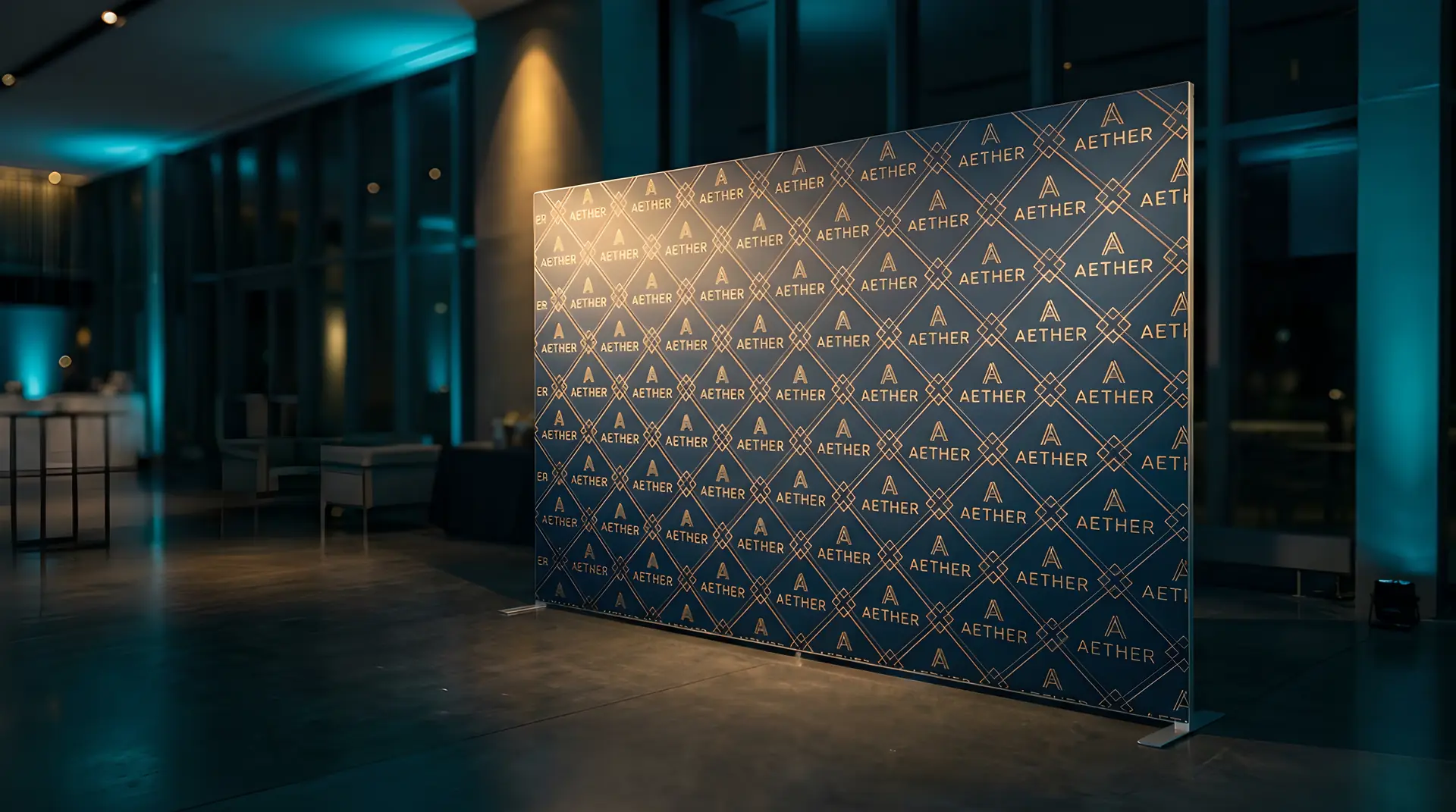
A step and repeat is a backdrop printed with logos in a repeating, staggered grid, set up where guests stop to have their picture taken — the red carpet, the gala entrance, the launch-party photo line, the press wall behind a podium. The logo repeats so that it lands in the frame no matter how the photo gets cropped: a full-length shot, a group of four, or a tight head-and-shoulders on somebody’s phone.
That’s the whole idea. Guests step up, get photographed, step off, and the next group repeats it — and every one of those pictures carries the brand.
Which means the backdrop isn’t decoration. The photo is the deliverable. It’s the only part of the night that is still working a year later, on a sponsor’s feed or in a press gallery. And the wall behind it is usually the cheapest structure in the room.
I’ve built walls in this city for 25 years. Here is what a step and repeat actually has to do, what sizes people use, what it’s made of, and when it makes sense to stop renting one.
The Crop Test: why the logo repeats
Nobody controls how a photo gets framed. The photographer shoots wide, the publicist crops it for a square post, the guest zooms in on their own face. A single big logo in the middle of the backdrop survives exactly one of those crops.
So the pattern is built backwards from the tightest crop. I call it the Crop Test: take the tightest picture anyone will plausibly post — one person, head and shoulders — and the backdrop passes if at least one full logo is still readable in it.
Three things fall out of that test:
- The tile has to be small. The logo plus its spacing has to fit inside a head-and-shoulders frame. A tile sized for a wide shot fails the moment someone crops.
- The rows are staggered. Each row is offset from the one above it, like brickwork, so a logo sits near every head height and every shoulder — not in neat columns a person can stand in front of and block.
- Two brands alternate. When there’s a host and a sponsor, they trade places along each row, so any crop that catches one usually catches the other.
And there is a fourth thing the Crop Test exposes, and it is the easiest one to miss: the surface has to be flat. A ripple travels straight through a repeating pattern. Your eye forgives a crease in a plain curtain. It does not forgive a grid of logos bending halfway across the frame.
Step and repeat sizes people actually use
Size comes from two numbers: how many people stand in front of it at once, and how much wall the camera sees above their heads.
| Size (wide × tall) | What it fits | Where you see it |
|---|---|---|
| 8 × 8 ft | One to four people, full length | Doorway photo-op, a private party, a small launch |
| 10 × 8 ft | A group of four or five with room to breathe | Gala entrance, sponsor wall, product launch |
| 16–20 × 8 ft | Two groups at once, or a photographer working one end | Red carpet line, premiere, benefit |
| 20 ft and longer | A full press line — guests walk it, photographers stand opposite | Premieres, awards nights, press conferences |
Sizes reflect common practice on printer and rental price sheets, not a 1W2R standard. 1W2R walls build in 4-ft sections, from an 8-ft photo-op to a 40-ft-plus press line, straight or cornered. Verified October 2026.
Two rules of thumb from the shop floor. Height: 8 feet is the working number, because the camera sits around chest height and sees a band of wall above the tallest head — go lower and the venue shows up in the top of the frame. Width: budget roughly two feet per person, then add some on each end so nobody stands on the edge where the backdrop ends.
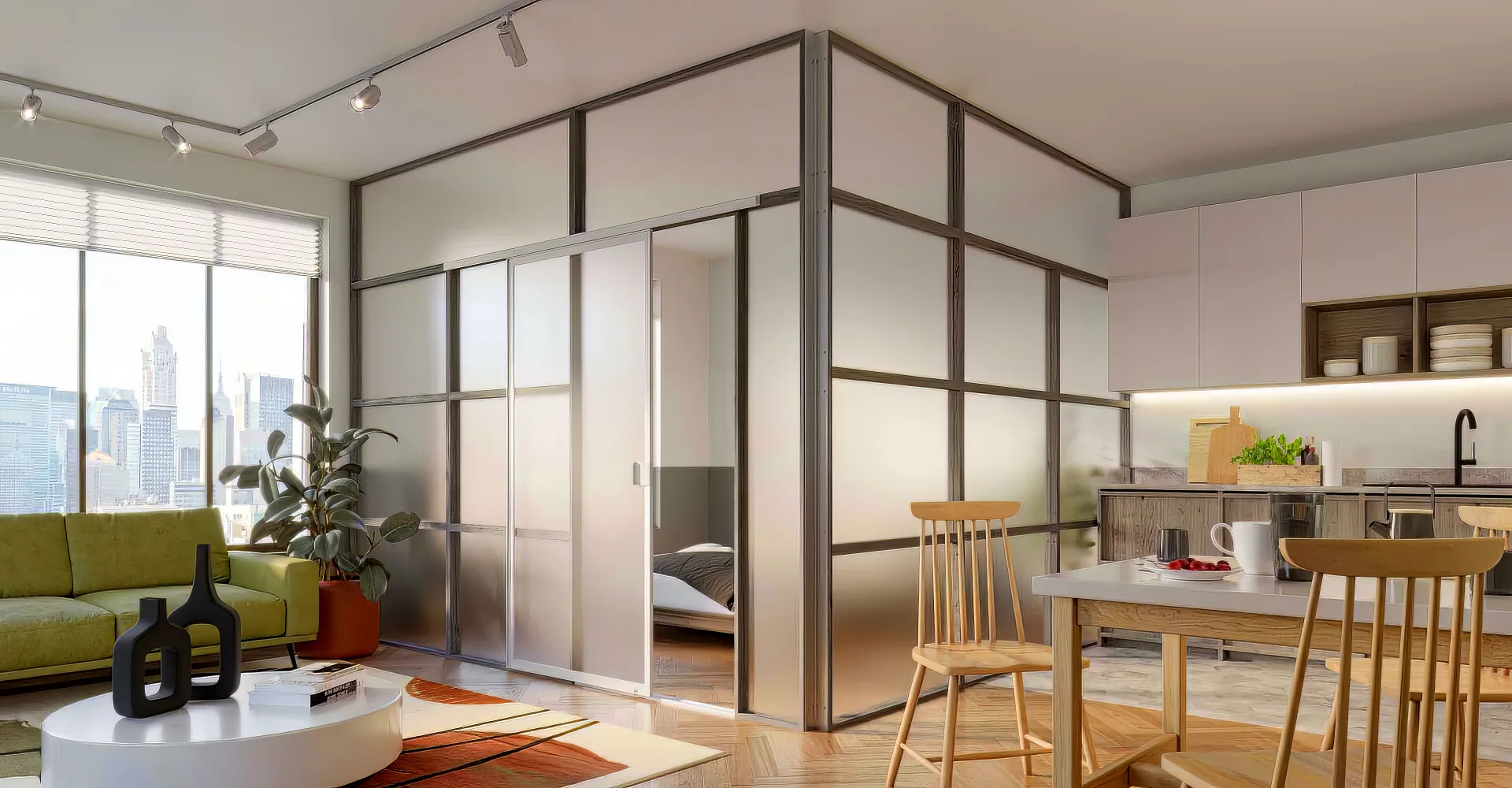
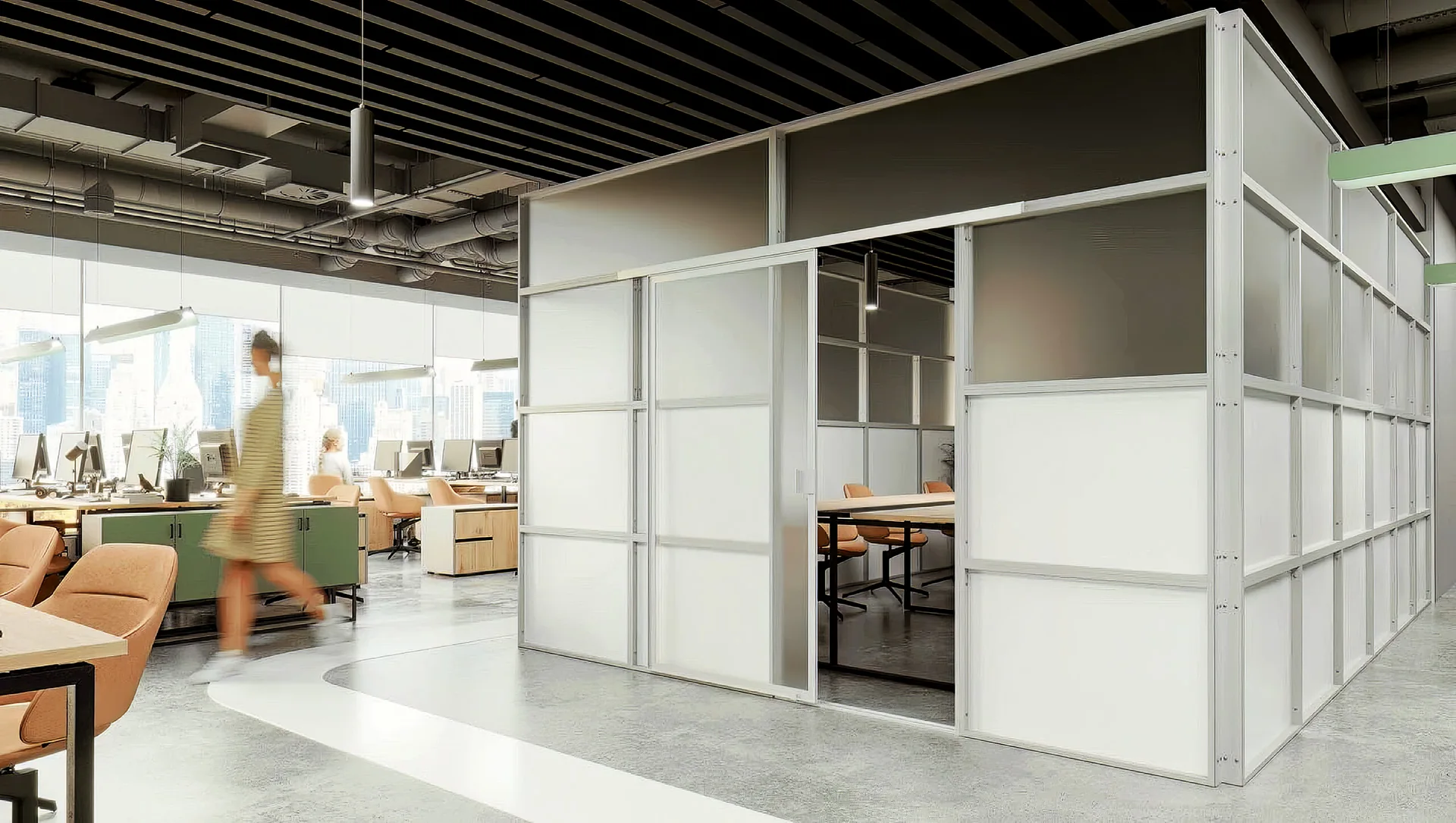
If the backdrop also has to turn a corner — wrap a column, frame an entrance, close off a VIP area behind it — that’s where a modular wall earns its keep. Ours build from 4-foot sections that lock into one flat logo wall, straight or cornered.
Fabric, vinyl or a rigid wall: what each one does in the photo
Every step and repeat is a printed graphic on something that holds it up. The graphic is the easy part. What holds it up decides how it looks on camera.
A vinyl banner on a stand. The most portable version: a printed banner hung from a telescoping frame, or grommeted to one. It rolls up into a bag and goes in a cab. The trade-off is that it hangs rather than stands — edges curl, it bellies between the frame points, a roll crease can show for the whole night, and a glossy print can throw the photographer’s flash straight back at the lens.
Printed fabric, loose. Fabric hung on pipe and drape, or draped over a frame. Lighter than vinyl and softer under flash. But fabric that hangs moves — with the air conditioning, with foot traffic, with every guest who brushes it — and fold lines from the shipping box show up in photos unless someone steams it on site.
Printed fabric, tensioned on a rigid frame. The same fabric, stretched tight across a frame instead of hung. This is the first version that photographs genuinely flat, with one seamless graphic and no seams through the sponsor’s logo.
A rigid freestanding wall with the graphic applied. A solid wall that stands on its own feet, with the print mounted flat on its face. Flat in every shot, corner to corner. No poles in the frame. And because it’s a real wall, it can carry things a banner can’t — screens set flush into the face, with the graphic wrapping around them, so the photo line and the sponsor loop are the same surface.
Chart 1 — The four ways to hold up a step and repeat
| Vinyl banner on a stand | Loose fabric / drape | Tensioned fabric on a frame | Rigid freestanding wall | |
|---|---|---|---|---|
| In the photo | Edges curl, can belly | Moves, shows folds | Flat | Flat, corner to corner |
| Under flash | Glossy prints can glare | Soft | Soft | Depends on the print — your printer’s call |
| Hardware in the frame | Stand legs, sometimes poles | Poles and bases | Frame edge | None — no poles in the shot |
| Carries screens or shelving | No | No | Limited | Yes — screens mount flush in the face |
| Who sets it up | One person, minutes | A rental crew | Varies by system | Our crew — a typical photo wall in under two hours, struck the same night |
| Best for | Small rooms, tight budgets, carry-in jobs | Masking, back-of-house | Trade booths, retail | Press lines, galas, any event where the photos are the point |
Banner, drape and tensioned-fabric behavior reflects general industry practice, not testing of any specific product. 1W2R install times and capabilities are from our published step and repeat page. Verified October 2026.
If you’re weighing drape specifically, I wrote up where drape is still the right call — it’s a real list, and it’s not short.
Rent or buy: the math
Here are our published numbers for a 4 × 8 ft section with your graphics applied, single-sided:
- Rent: $858 per section, per event — delivered, installed and struck.
- Own: $1,300 per section.
- Plain one-color wall, no graphics: $650 to rent, $1,176 to own.
Now run it. One event, renting is cheaper: $858 against $1,300. The second event is where it flips — two rentals are $1,716, which is $416 more than owning the wall outright.
| Events this year | Rent each time | Own the wall | Owned cost per event |
|---|---|---|---|
| 1 | $858 | $1,300 | $1,300 |
| 2 | $1,716 | $1,300 | $650 |
| 4 | $3,432 | $1,300 | $325 |
| 6 | $5,148 | $1,300 | about $217 |
Per 4 × 8 ft section, graphics applied, single-sided, at 1W2R’s published rates. Owned cost covers the wall only — new graphics come from your printer, and moving the wall between events is yours to handle or ours to quote. Longer runs and custom sizes are quoted the same day. Verified October 2026.
That’s the honest shape of it: if the event happens once, rent. If it comes back even once — an annual gala, a quarterly launch, a show that tours — own the wall and have your printer re-skin it for each one. The wall stays the same. The logos change.
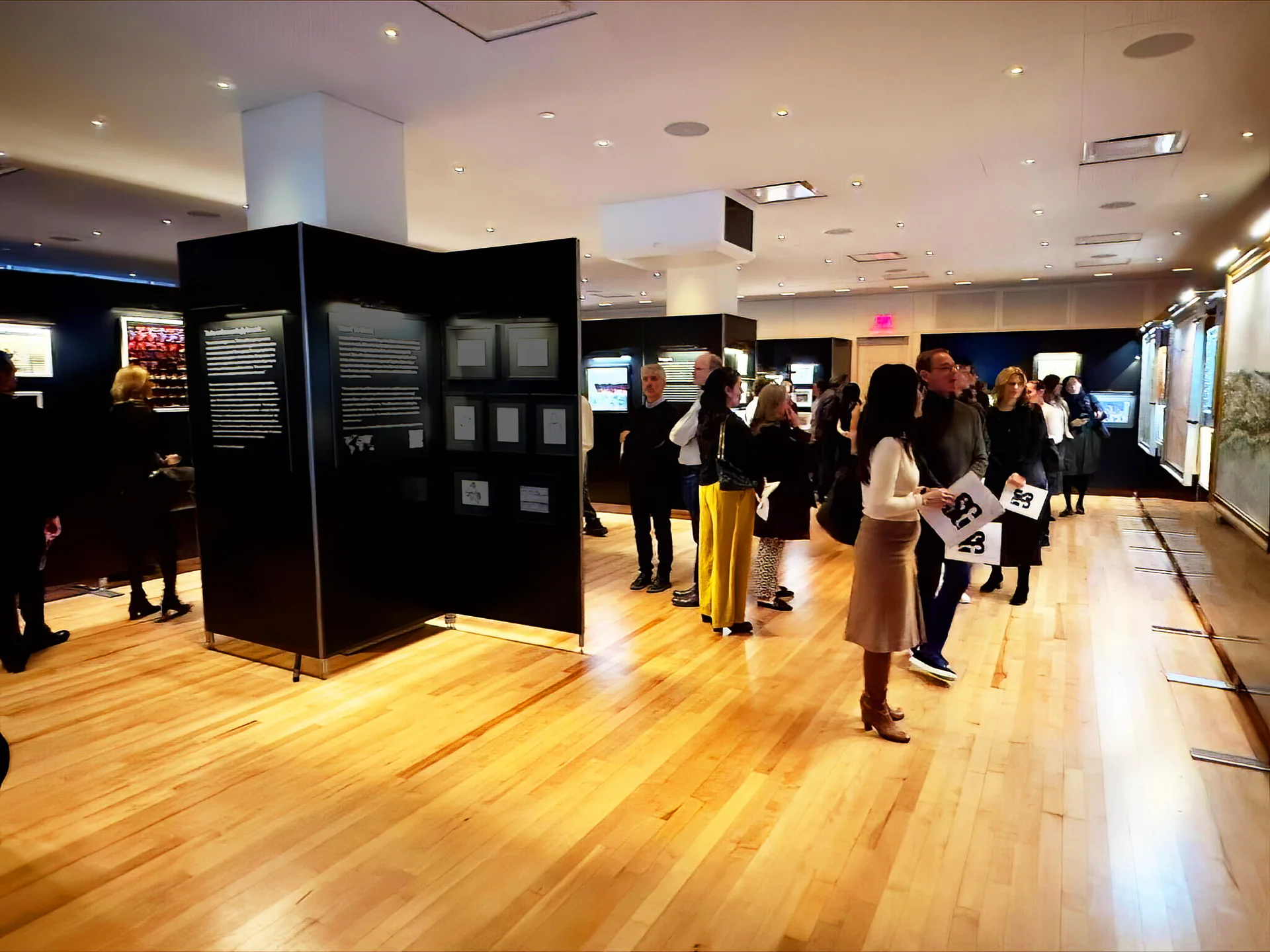
The plain wall follows the same curve. If the backdrop is going to be painted, dressed, or carry art rather than a printed repeat, it’s the same system as our freestanding display walls for galleries and activations, and the same rent-or-own math applies.
The honest turn — who this isn’t for
A rigid wall is the right answer for a specific kind of event. Here is where it isn’t:
- We don’t print the graphics. On purpose. Your printer — or your sponsor’s — produces the art to brand spec, and it mounts flat on our wall. Your brand team stays in control of color. If what you need is only a printed banner, that’s a different product from a different supplier, and we’ll tell you so.
- We don’t build for the carry-bag job. If the backdrop has to ride in a cab to a hotel suite and stand for an hour, buy a banner stand. A rigid wall arrives on our truck with our crew across the five boroughs and New Jersey, or ships flat for your own crew to stand up.
- It isn’t a drape kit, an inflatable, or a flower wall. Though if a florist is building you one, a rigid wall underneath the florals is a better base than chicken wire on a frame.
- Owning means storing. The panels break down flat, but they need a place to live between events. Count that before you buy.
Everything else — the flat logos, the clean frame, the venue saying yes — it does the night it arrives.
How to plan a step and repeat for an event
- Pick the photo spot before the floor plan is final. Where guests arrive, out of the main traffic path, with room for the photographer to back up. Guests should stand a few feet off the wall, not against it, so their shadows fall behind them instead of across the logos.
- Size it to the biggest group and the camera. Count the largest group that will pose at once, give each person about two feet, add margin on both ends, and keep it 8 feet tall unless the ceiling says otherwise.
- Get the art to your printer early, and connect them to us. Send us your floor plan or your printer’s spec sheet and you’ll have a number the same day. We size the wall to whatever they produce.
- Clear it with the venue. This is where freestanding pays off. Hotels ban rigging, galleries ban holes, lofts have nothing to hang from — a wall that stands on its own feet needs none of it. A certificate of insurance is available on request.
- Book the load-in and strike. A typical photo wall goes up in under two hours and comes down the same night after the last shot. Give us your load-in window before you book and we’ll confirm it.
- Light it on purpose. Talk to the photographer about where the light comes from, and ask your printer for a finish that won’t flare under flash. Built-in lighting on the wall itself is an option, quoted per project.
- Decide rent or own before you print. If the event comes back, buy the wall and print the graphics knowing you’ll re-skin it next time.
And when the logo wall is one piece of a bigger build — a launch, a sample sale, a reveal room — the same walls run the whole space. That’s the build-out for a full brand activation: display walls, a private room, a press backdrop, all struck the same night.
Our walls have stood at the Metropolitan Pavilion, the Rainbow Room, Nasdaq and the United Nations — buildings that say no to almost everything, and said yes to a wall that touches nothing.
Running a press line this season?
Send the floor plan and your printer’s graphic sizes. You’ll get a wall layout, a quote and an install window — same day.
Price a Rigid Logo WallOr see per-event wall rentals →
Frequently asked
A backdrop printed with logos in a repeating, staggered grid, set up where guests are photographed at an event. The logo repeats so that it shows up in every photo, however the shot gets cropped.
Guests step up to the backdrop, get photographed, step off, and the next group repeats it. The name also describes the print itself: one logo, stepped across and down the backdrop over and over.
8 feet is the working height. For width, budget about two feet per person in your largest group, plus margin on each end: 8 feet for a small photo-op, 10 feet for a group of four or five, 20 feet and up for a press line.
Neither one matters as much as how it’s held up. Loose fabric and hung vinyl both move and wrinkle on camera. Fabric stretched tight on a frame, or a graphic mounted on a rigid wall, stays flat in every shot.
From 1W2R, a 4 × 8 ft rigid section with your graphics applied rents for $858 per event, delivered, installed and struck. Owning one is $1,300, so two events already cost more to rent than to buy. A plain one-color wall is $650 to rent or $1,176 to own.
No. We build the wall. Your printer produces the graphics to your brand spec and they mount flat on it. Send us their spec sheet and we’ll size the wall to match.
Yes. Nothing attaches to the walls, floor or ceiling, so venue rules about rigging and drilling don’t apply. A certificate of insurance is available on request.
Get the spec PDF + 24h quote
No contractor, no permit, ships nationwide.