


The True Cost of a Pressurized Wall in NYC (Including What You Lose at Move-Out)

Last reviewed by Amit · May 2026
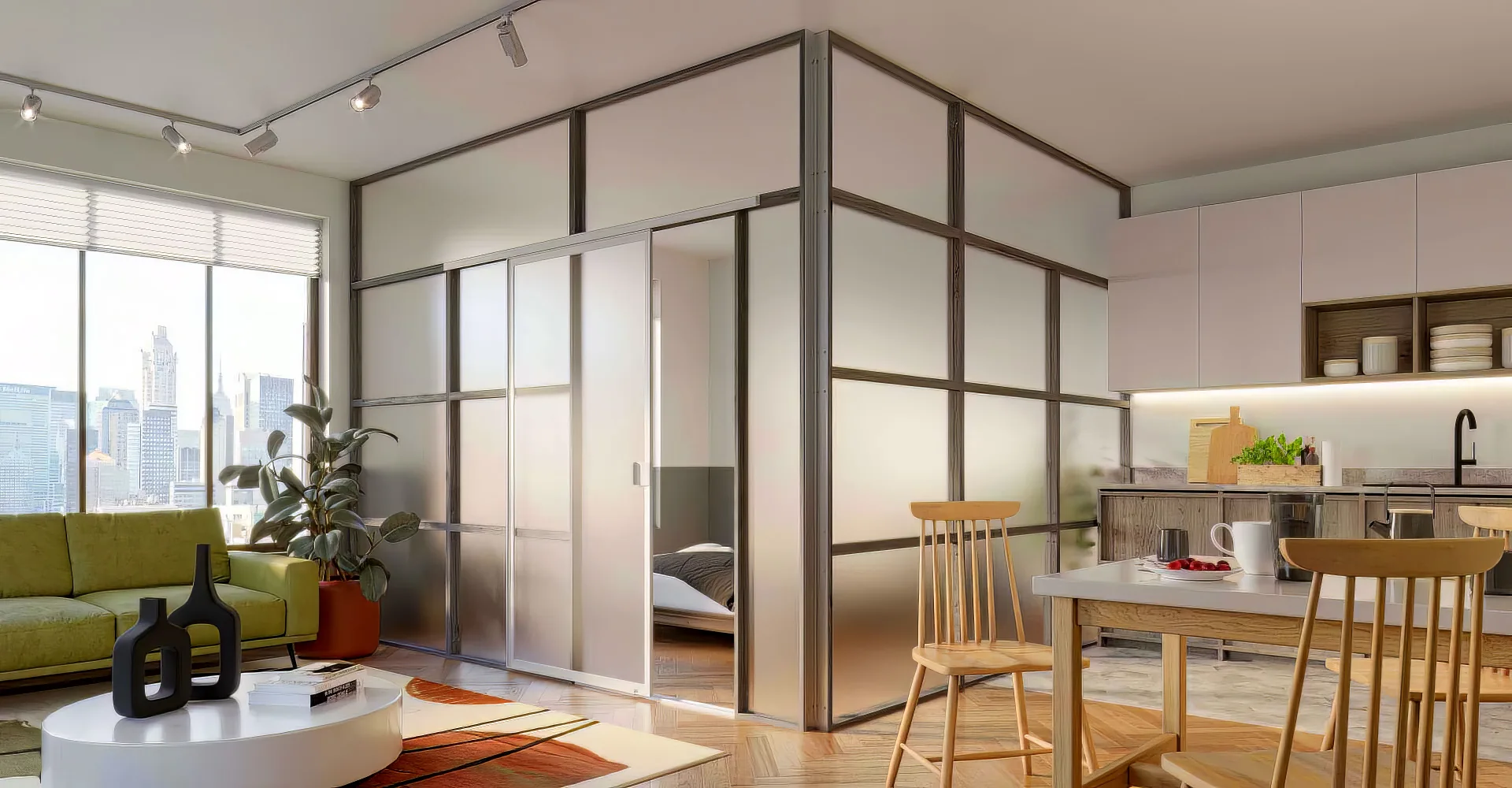
The pressurized wall pitch is always the same: somewhere between $800 and $2,000 upfront, you get a temporary wall that creates a new room in your NYC apartment. It sounds like a reasonable deal. And for the first few months, it usually is. Then move-out day arrives.
The Upfront Quote: 2025 NYC Market Rates
| Configuration | Price Range |
|---|---|
| Basic studio flex wall, no door | $800 – $1,200 |
| Studio flex wall with door | $1,100 – $1,600 |
| Full-width one-bedroom conversion | $1,400 – $2,200 |
| Premium finish / solid panel | $1,800 – $2,800 |
These are the numbers companies advertise. They are real — but they are also just the beginning.
The Hidden Cost Layer
1. The Removal Fee — and the Scheduling Problem
Pressurized walls are installed by a crew. They need to be removed by a crew. That’s a separate appointment, a separate fee, and a separate coordination problem.
- Basic removal, same company: $200 – $500
- Expedited/weekend removal: add $100 – $200
- Third-party removal: $300 – $600+
In peak moving months (August, September, May–June), pressurized wall removal companies have multi-week backlogs. If you’re not planning your removal appointment two to three weeks in advance, you may not get your preferred date — leaving you paying rent overlap or abandoning the wall entirely.
2. Security Deposit Deductions for Physical Damage
Pressurized walls exert constant mechanical force — typically 40 to 80 pounds of tension — against your floor and ceiling. That force leaves marks. Premium and luxury buildings in NYC have detailed move-out inspection protocols, and they know exactly what to look for.
- Ceiling drywall repair: $300 – $600
- Ceiling plaster repair (pre-war): $400 – $900
- Floor refinishing: $300 – $700
- Full repaint triggered by patch work: $500 – $1,200
3. The Prohibited Installation Problem
If you installed a pressurized wall in a building that prohibits them — whether you didn’t read the house rules or your landlord verbally said it was “probably fine” — the consequences can be severe: forced immediate removal at your expense, lease non-renewal, and forfeiture of your security deposit.
4. The Reuse Problem: You Can’t Take It With You
When you move out, the wall goes in the trash. It’s construction waste. The panels, the framing, the tension mechanism — none of it moves with you, none of it fits a different apartment, and none of it has a resale market. You paid $1,200–$2,000 for something disposable.
The Full True Cost Calculation
| Cost Component | Low Estimate | High Estimate |
|---|---|---|
| Installation | $1,000 | $2,200 |
| Removal fee | $250 | $500 |
| Scheduling friction / rent overlap | $0 | $1,500 |
| Security deposit deductions | $400 | $2,000 |
| Total per apartment | $1,650 | $6,200 |
Over two moves in five years — the NYC average for renters in their 30s — the realistic total cost is $6,000 – $9,000. The worst case (prohibited building, full deposit loss) exceeds $10,000.
The Freestanding System Comparison
| Cost Component | Freestanding System |
|---|---|
| Initial purchase | $1,500 – $3,500 |
| All subsequent moves | $0 |
| Security deposit impact | $0 |
| Removal coordination | $0 |
| Total over 5 years | $1,500 – $3,500 |
The freestanding system costs the same or less upfront — and accumulates zero ongoing costs. It moves with you. It reconfigures to fit your next apartment. The investment doesn’t reset at each move.
The Bottom Line
The pressurized wall math only works if you look at the upfront number in isolation. When you factor in removal, damage risk, and the zero residual value — the true cost is nearly double. A premium freestanding system, by contrast, is an asset that pays for itself across moves.
Want to see what a freestanding system would cost for your specific space? Get a free layout consultation →
Get the spec PDF + 24h quote
No contractor, no permit, ships nationwide.