



You Saved $5,862 on the Broker Fee. Here’s What a Third of It Buys.


Reach me: 212.671.0722 · sales@1w2r.com
Last reviewed by Amit · August 2026
The Windfall Window
Every renter I’ve talked to since the law passed describes the same three weeks.
The fee doesn’t arrive as a check. It arrives as an absence — a number that was supposed to be on the lease and isn’t. And because it never becomes a deposit in your account, it gets spent the way absences get spent: on the sofa, the movers, the first month of a slightly nicer apartment, four hundred dollars of small things that were going to be problems anyway.
Call it the Windfall Window. One lump sum, roughly one week of clear thinking after signing, and then it’s furniture.
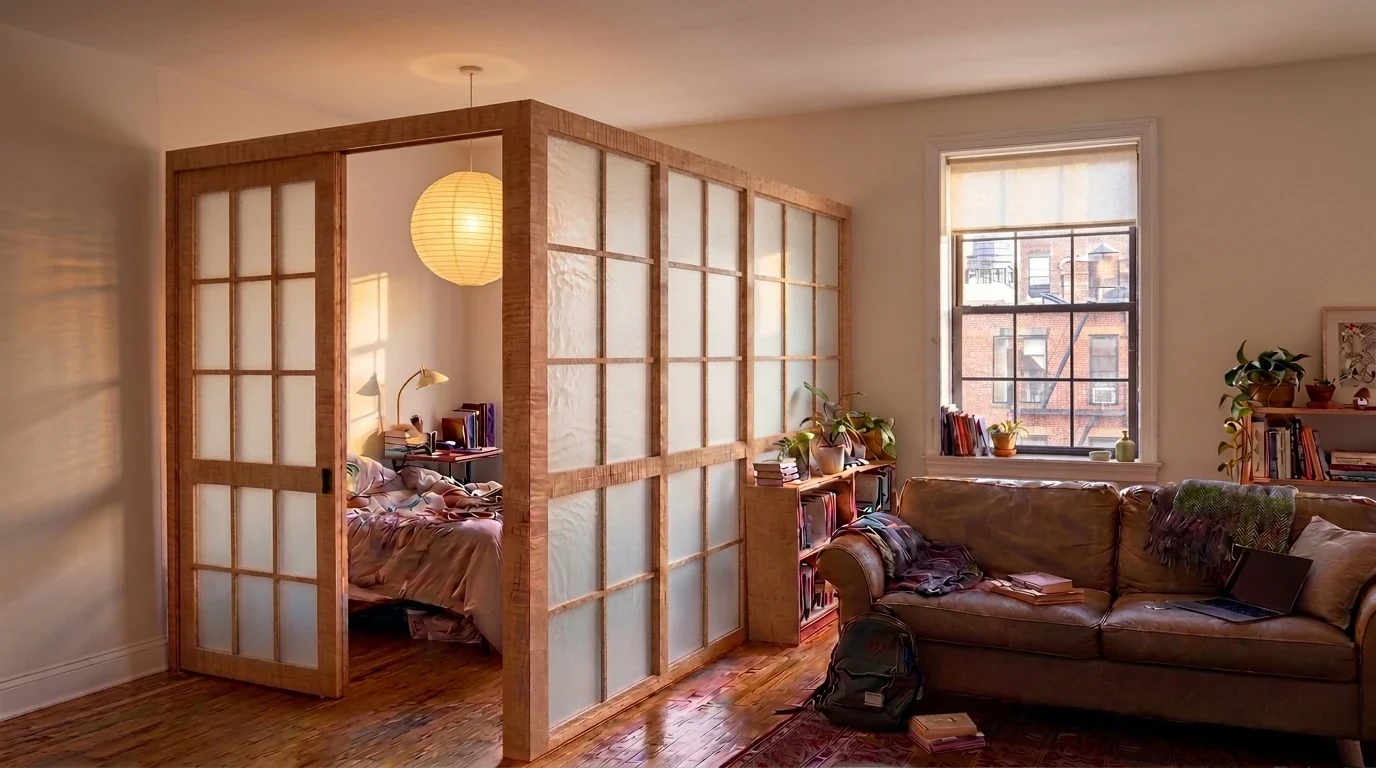
I’m not going to tell you a sofa is a bad purchase. I’m going to point out that this is the only week of your lease where a four-figure decision is genuinely available to you, and that there is exactly one thing you can buy in that window that changes the apartment’s floor plan instead of its decor.
What the fee was actually paying for
Worth being honest about the other half of the ledger, because StreetEasy was.
The same report found that in exchange for the fee going away, renters are paying about $46 more per month in rent. Landlords who used to pass the broker’s cost to the tenant have moved some of it into the rent. Units that previously charged a tenant-paid fee saw asking rents rise about 6.4% year over year — faster than units that never charged one.
So the FARE Act is not free money. It’s a trade, and it’s worth seeing the trade written down, because nobody in the coverage has bothered.
Chart 1 — What the trade actually costs you, year by year
| At signing | After 1 year | After 2 years | After 3 years | |
|---|---|---|---|---|
| Broker fee you didn’t pay | +$5,862 | +$5,862 | +$5,862 | +$5,862 |
| Extra rent, at ~$46/mo | $0 | −$552 | −$1,104 | −$1,656 |
| Still ahead by | $5,862 | $5,310 | $4,758 | $4,206 |
StreetEasy’s one-year FARE Act analysis, published June 11, 2026: an average $5,862 broker fee avoided at signing, against roughly $46/month in higher rent. Units that previously charged a tenant-paid fee saw asking rents rise about 6.4% year over year. A broker fee historically ran about 12% of a year’s rent. Verified August 2026.
Read the bottom row left to right. The trade gets slightly worse every year you stay — but you never fall below four thousand dollars ahead, and, this is the part that matters, you are ahead on day one instead of on day seven hundred.
Money you have at signing can be spent on the apartment. Money you save $46 at a time cannot. That’s not a small distinction — it’s the entire difference between a discount and an option.
The comparison nobody runs
Here is the decision most renters make without ever writing it down.
You want two bedrooms. You look at two-bedrooms. They’re brutal, so you compromise on neighborhood, or floor, or light, or you take the one-bedroom and resent it.
What you almost never do is price the third option: take the one-bedroom you actually liked, and add the room.
I’m not going to re-run that math here, because I’ve already written it properly. At June 2026 Brooklyn averages the gap between a one-bedroom and a two-bedroom is over $1,400 a month, and the three-year number is north of fifty thousand dollars — at the end of which you own nothing. The Door Premium walks the whole thing.
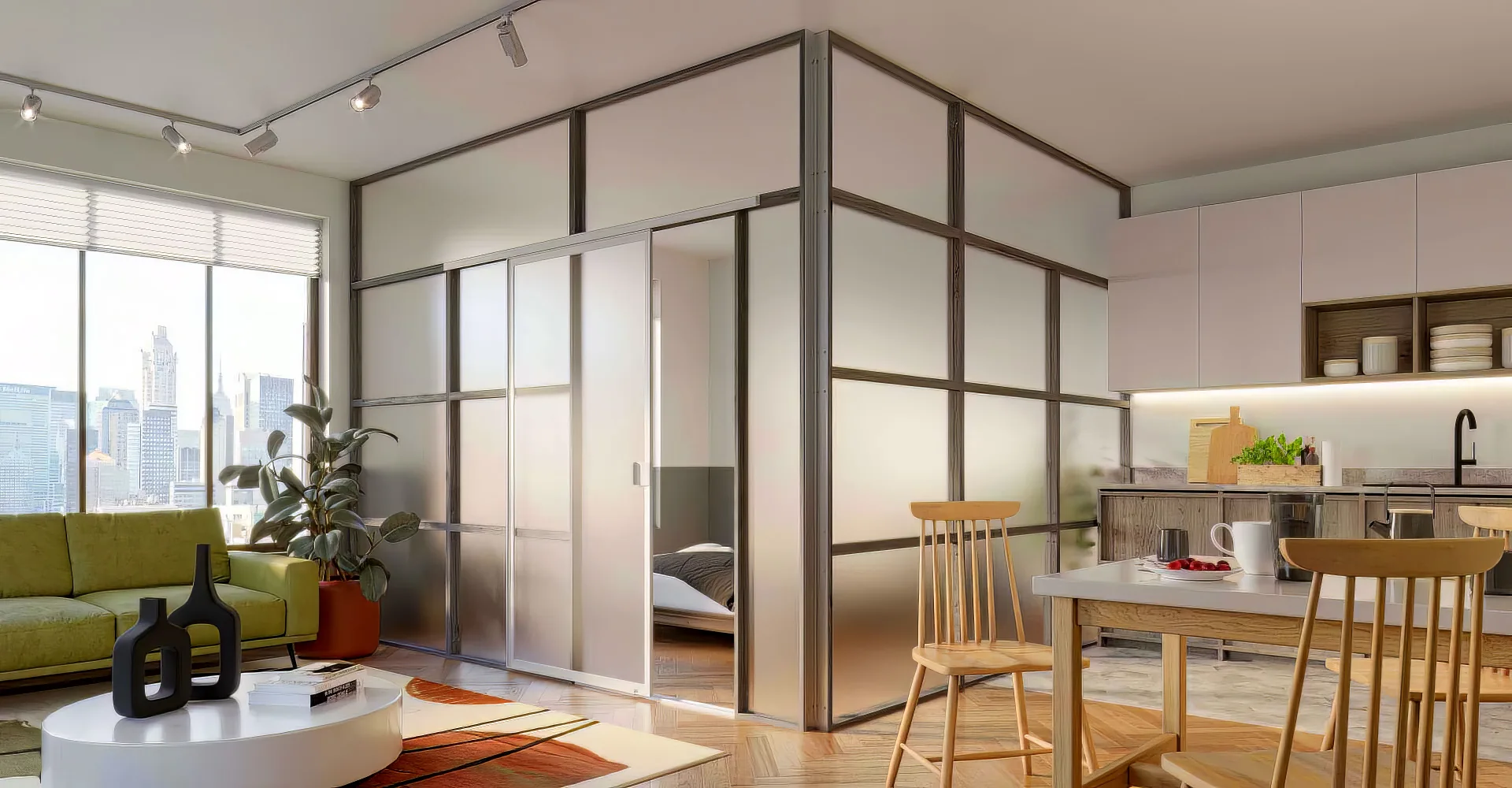
The only number worth adding here is this one: the broker fee you didn’t pay covers the wall roughly five times over. Our standalone dividers start at $1,176. Whatever the right configuration turns out to be, it is a fraction of a sum you already have.
The honest turn — when this is the wrong move
Three situations where you should not spend the windfall on a wall.
You need a legal second bedroom. A freestanding divider creates a private space with a real door. It does not create a legal bedroom, and I won’t pretend otherwise. A legal NYC bedroom needs a minimum of 80 square feet, at least eight feet in both directions, an operable window of at least 12 square feet facing a street or yard, and two means of egress. Nothing that stands on your floor changes any of that. If you’re subdividing to sublet as a “2BR," stop reading — that’s a different problem and it ends badly.
Your one-bedroom is genuinely one room. The math above assumes a living space wide enough to give up eight or ten feet and still function. A 380 sq ft junior with one window is not that apartment. Come back with dimensions and I’ll tell you straight if it doesn’t work.
You’re moving again in six months. You’d still come out ahead — the wall disassembles into panels and goes with you, which is the whole point — but if the next apartment is unknown, the honest advice is to wait until you know what you’re dividing.
And a fourth, which isn’t about us at all: if your windfall is the only cash you have and your job is shaky, keep it. A room is not an emergency fund.
What makes this purchasable in one week
The reason this fits the Windfall Window and a renovation doesn’t:
- It attaches to nothing. No fasteners into your floor, ceiling, or walls. That’s what keeps it out of permit territory and away from your security deposit.
- It arrives finished. Panels are built and finished in our Brooklyn shop. Nobody paints or cuts in your apartment. The on-site toolkit is a drill and two clamps.
- It’s a purchase, not a lease. Some companies in this city rent you the wall and charge you again to remove it. Ours is yours — see the full comparison of NYC companies if you want the ownership math laid out side by side.
- It moves. Straight, L-shape, Z-shape. Next apartment, next room, or resold.
- We’ll write your building a vendor letter if management asks what’s arriving.
We install across all five boroughs and New Jersey with our own crew, and ship nationwide for self-install.
Spend the window on the floor plan.
The broker fee is the one time New York hands a renter a lump sum instead of a bill. It will be gone in a week, and in a year you won’t remember what it became.
Send us the dimensions of the room you’d divide. We’ll send a quote within 24 hours, and if the room won’t work, we’ll tell you that instead.
Frequently asked
Did the FARE Act actually save renters money, or did landlords just raise the rent?
Both, partly. StreetEasy’s one-year analysis found renters avoided an average $5,862 fee at signing while paying about $46 more per month. Over two years that’s roughly $1,100 clawed back out of $5,862. You’re still meaningfully ahead, and you’re ahead at signing rather than in installments.
How much does a freestanding room divider actually cost?
Our standalone dividers start at $1,176 — that’s our published list price, not a lead-in estimate. A typical 11–13 ft span with a sliding door lands in the low thousands. Doors and finishes are optional add-ons and we quote them separately rather than hiding them.
Will this get my security deposit taken?
It attaches to nothing — no screws into the floor, ceiling, or walls — so there is nothing to patch when it leaves. That’s the entire design premise. Get “no fasteners into the apartment" in writing from any company before their crew shows up, including ours.
Do I need my landlord’s or co-op board’s permission?
Because it’s freestanding, it’s furniture by engineering — it doesn’t alter the apartment. Most tenants don’t need approval for furniture. That said, buildings vary and some managements want a heads-up about anything arriving on a freight elevator. We’ll write a vendor letter if yours asks.
Does it make the room soundproof?
No. No temporary wall is soundproof — not pressurized, not bookcase, not freestanding, not anyone’s. Ours dampens sound and makes a room significantly quieter, and full height helps more than anything else. If sound is your actual problem, read what these things really do to noise before you buy from anybody.
Can I take it with me when I move?
Yes. It slides fully built through most spaces, disassembles into panels, and reconfigures from straight to L to Z. People move them between apartments and resell them. That’s the difference between an expense and an asset.
Sources & further reading
- StreetEasy, “One year after the FARE Act, NYC’s housing shortage still drives rent growth" (published June 11, 2026) — the $5,862 average fee avoided at signing, the ~$46/month rent offset, and the 6.4% year-over-year asking-rent rise on units that previously charged tenant-paid fees.
- StreetEasy Manhattan rental market update (May 2026) — Manhattan median asking rent at a record $4,927, up 7.2% year over year; Manhattan rental inventory down for a 27th consecutive month. Context for why the 2BR jump keeps widening.
- Corcoran / Brick Underground, June 2026 rental market report — Brooklyn average 1BR $4,297 vs average 2BR $5,740; Manhattan median $5,295. The source of the $1,443/month door premium.
- NYC Administrative Code, FARE Act (Local Law 119 of 2024, effective June 11, 2025) — the text of who may be charged a broker fee and the required upfront fee disclosure on listings.
- NYC Building Code / DOB guidance on legal bedrooms — the 80 sq ft minimum, 8-foot dimensions, operable window and two-means-of-egress requirements referenced above, and why unpermitted subdivisions draw violations.
Send us the dimensions of the room you’d divide and we’ll send a quote within 24 hours — from $1,176 for a standalone divider. If the room won’t work, we’ll tell you that instead.
Get the spec PDF + 24h quote
No contractor, no permit, ships nationwide.